Marrakech is having a moment, which is only mildly annoying because Marrakech has clearly known it was fabulous for centuries.
For 2026, the city has been tipped as one of the year’s most desirable destinations, and it is easy to see why. It is close enough for a long weekend from London, yet feels like a complete change of setting, pace and personality. One minute you are at Gatwick wondering if a Mimosa counts as breakfast, the next you are surrounded by terracotta rooftops, mint tea, carved doors, zellige tiles and the sudden belief that your home has always needed a brass lantern.
Forty-eight hours is not enough to know Marrakech properly, but it is enough to understand the appeal. The trick is not to conquer the city. Marrakech does not want to be conquered. It wants to be tasted, wandered, negotiated with, photographed, briefly misunderstood, then forgiven over dinner.
For the discerning traveller, a weekend here needs balance. Somewhere calm to stay. Somewhere memorable to eat. A little culture, a little chaos, a hammam, a tagine, and enough dirhams to survive the souks without accidentally returning home with a rug because you “absolutely needed” it.
Where To Stay
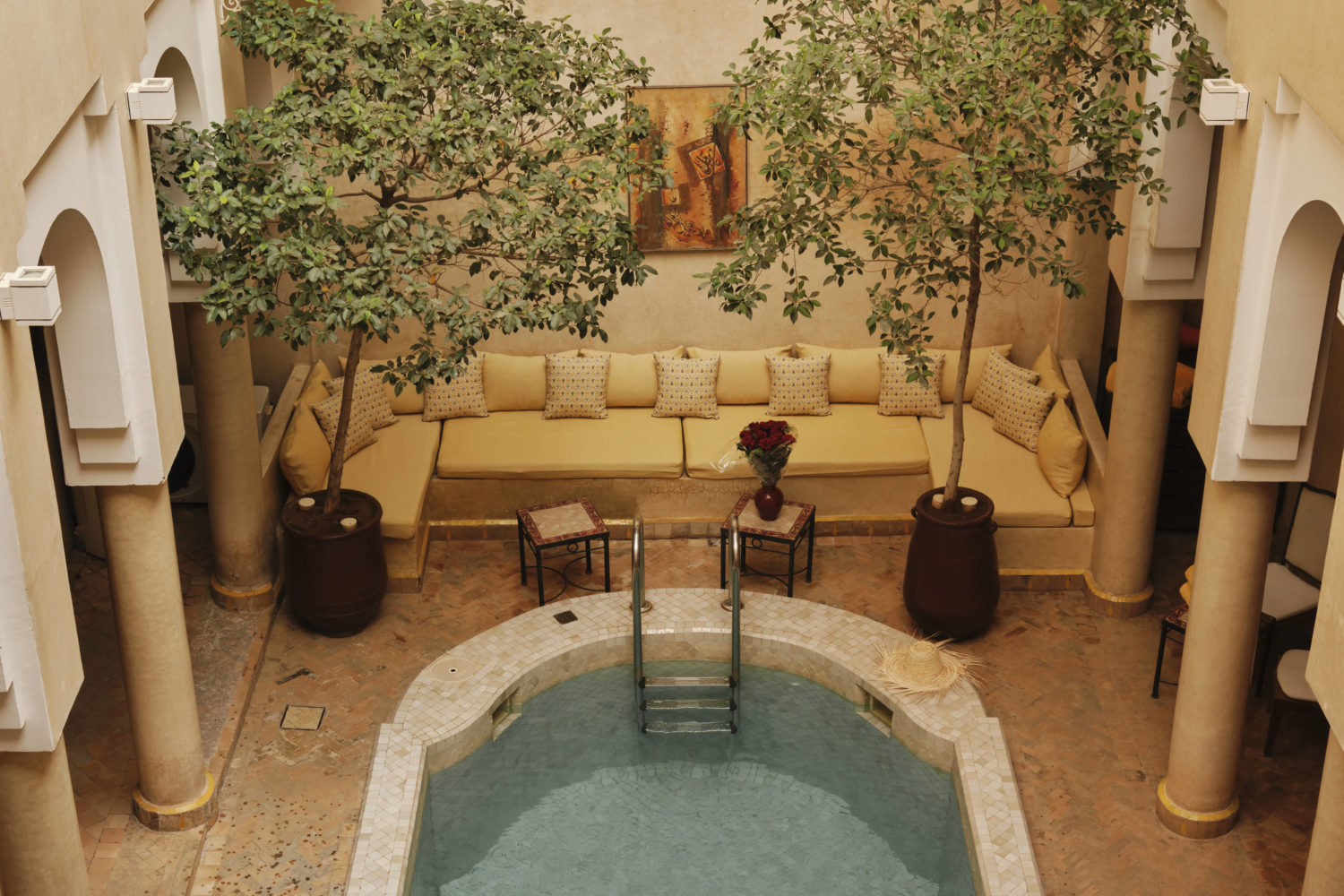
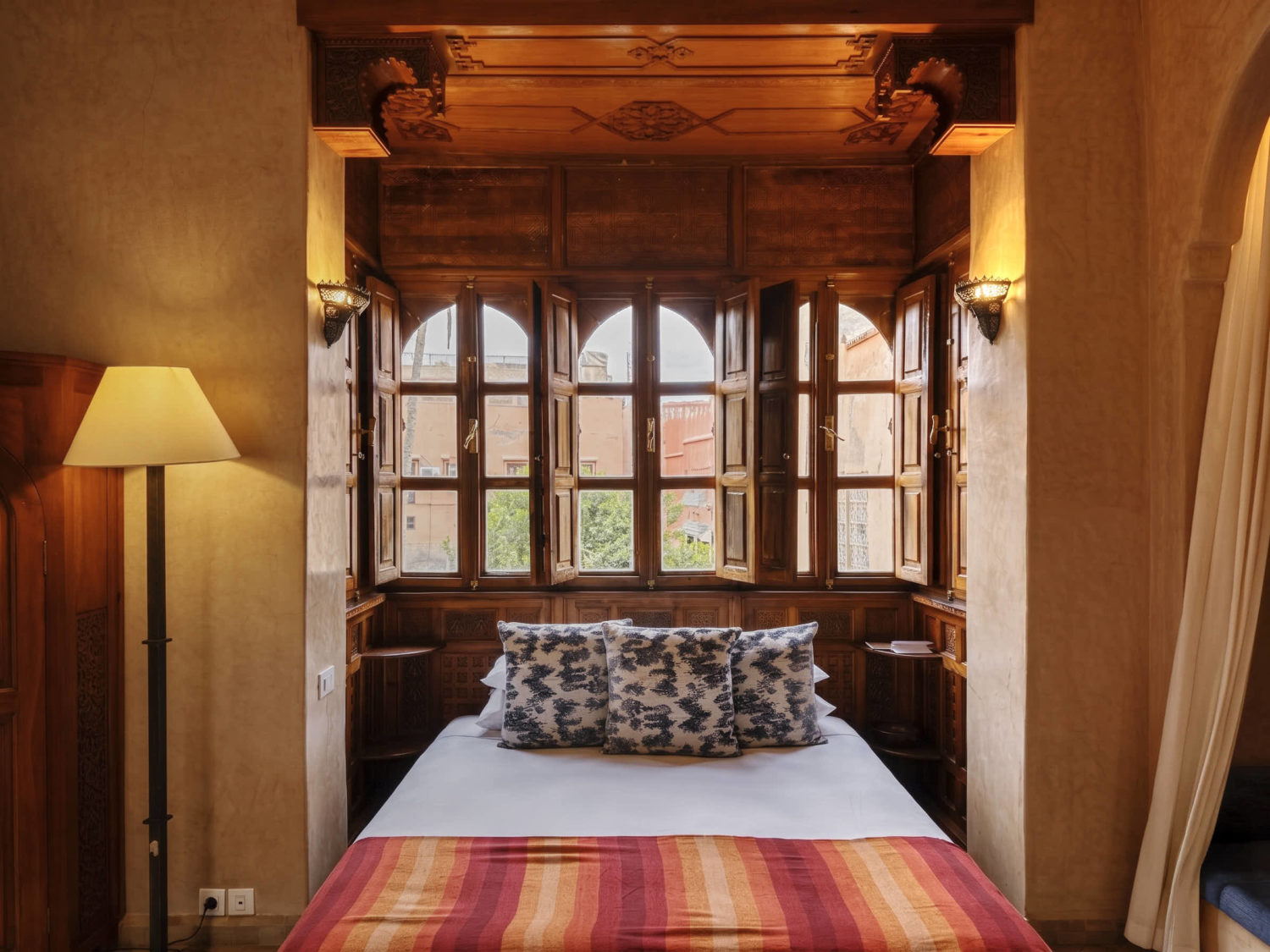
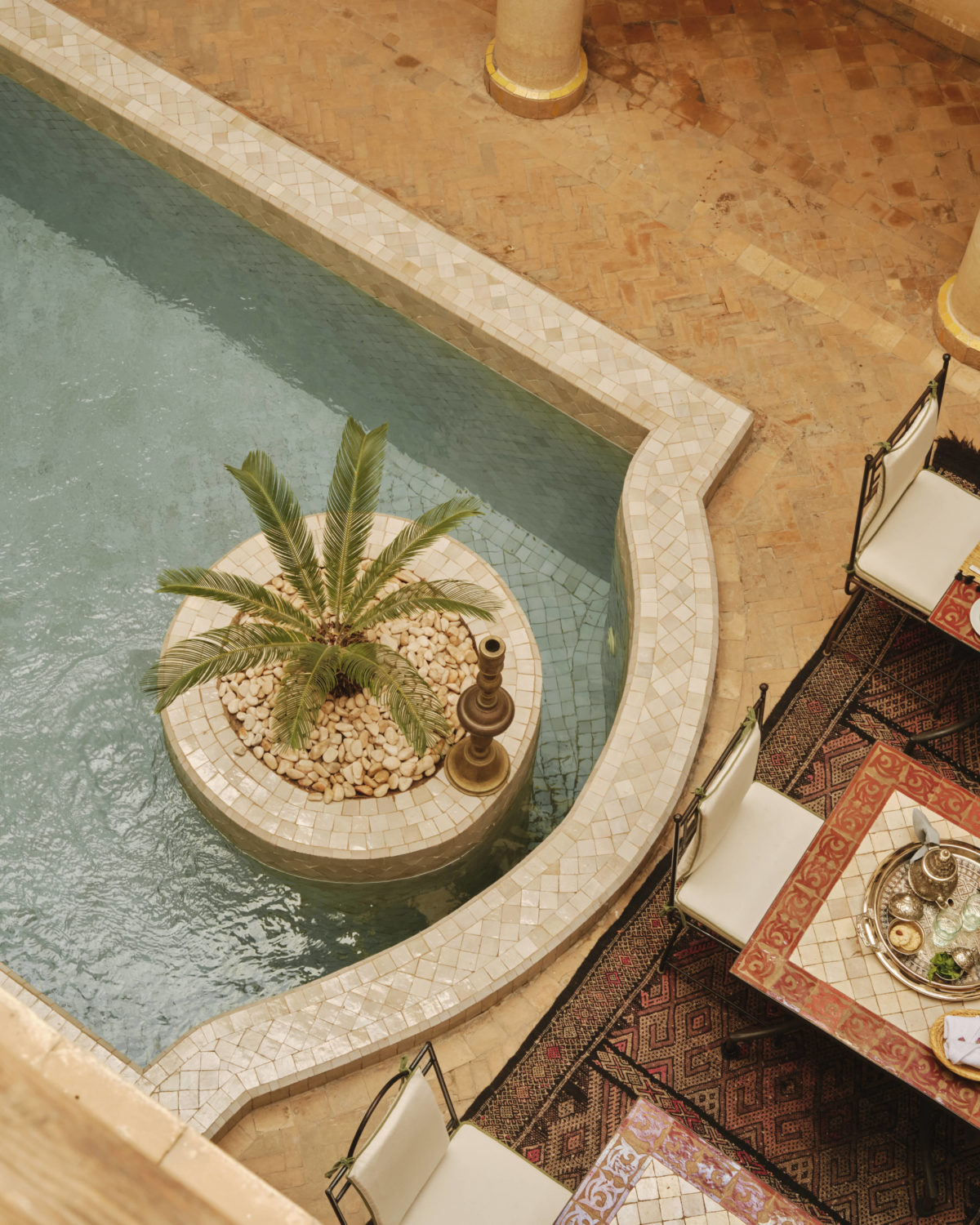
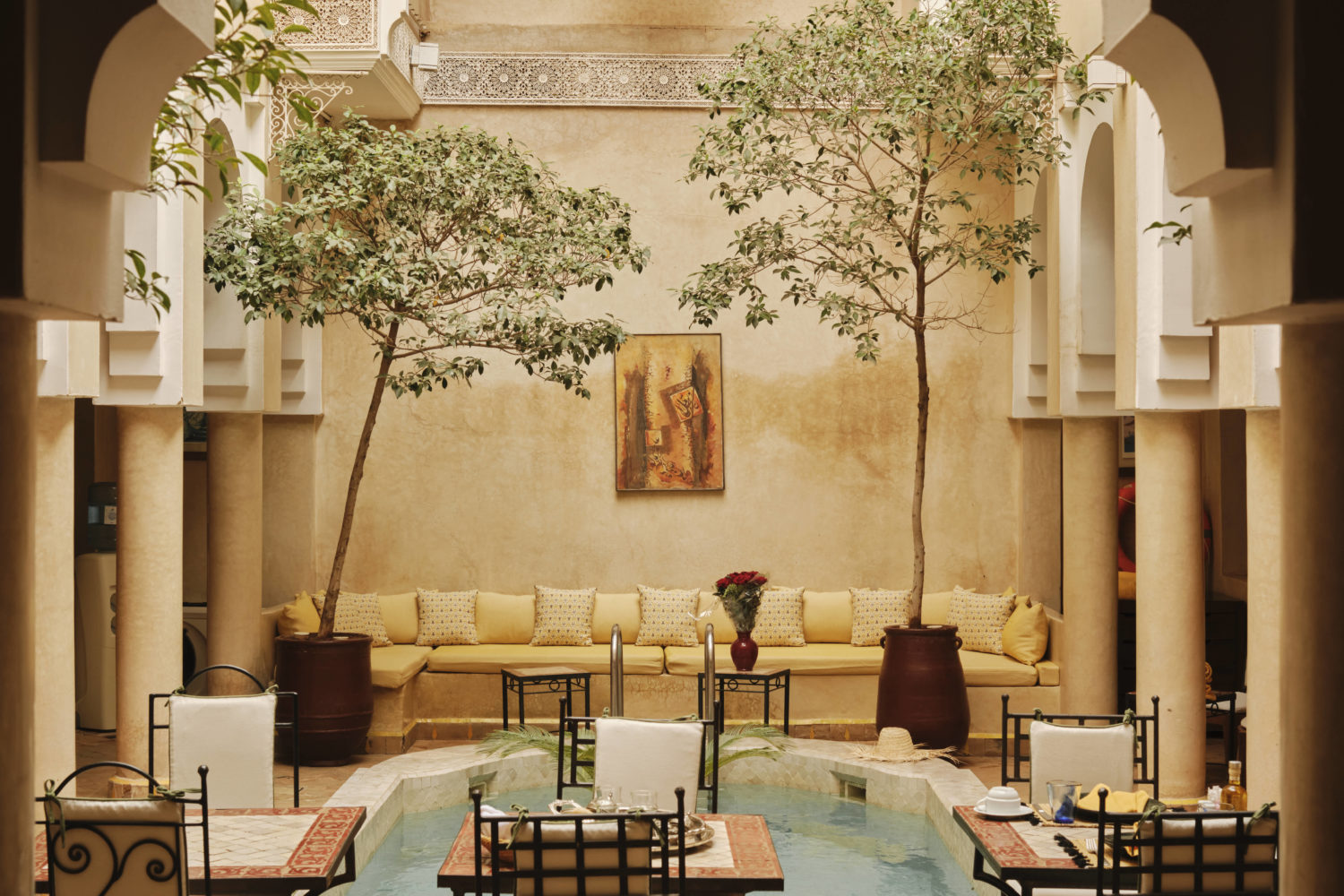
Marrakech Riads, Angsana Heritage Collection offers exactly the kind of calm that becomes essential after a few hours in the city. Hidden behind discreet doors in the historic centre, the collection is made up of restored riads where Moroccan craftsmanship does the heavy lifting: carved wood, shaded courtyards, zellige, palms, fountains and soft pools of light.
At Riad Lydines, the feeling is more private house than hotel. Luxury is not announced loudly. It sits in the cool tiles, the quiet corners, the fresh pastries at breakfast, the mint tea that appears with excellent timing and the sense that someone has thought about your comfort without making a performance of it.
For groups, the riad can also be booked in its entirety, making it a clever option for milestone birthdays, intimate celebrations or a stylish escape with friends. It gives the stay a private house feeling, with the courtyard, rooftop corners and candlelit spaces all to yourselves. Far more characterful than taking over a floor of a large hotel, and much easier to romanticise later.
Where To Eat
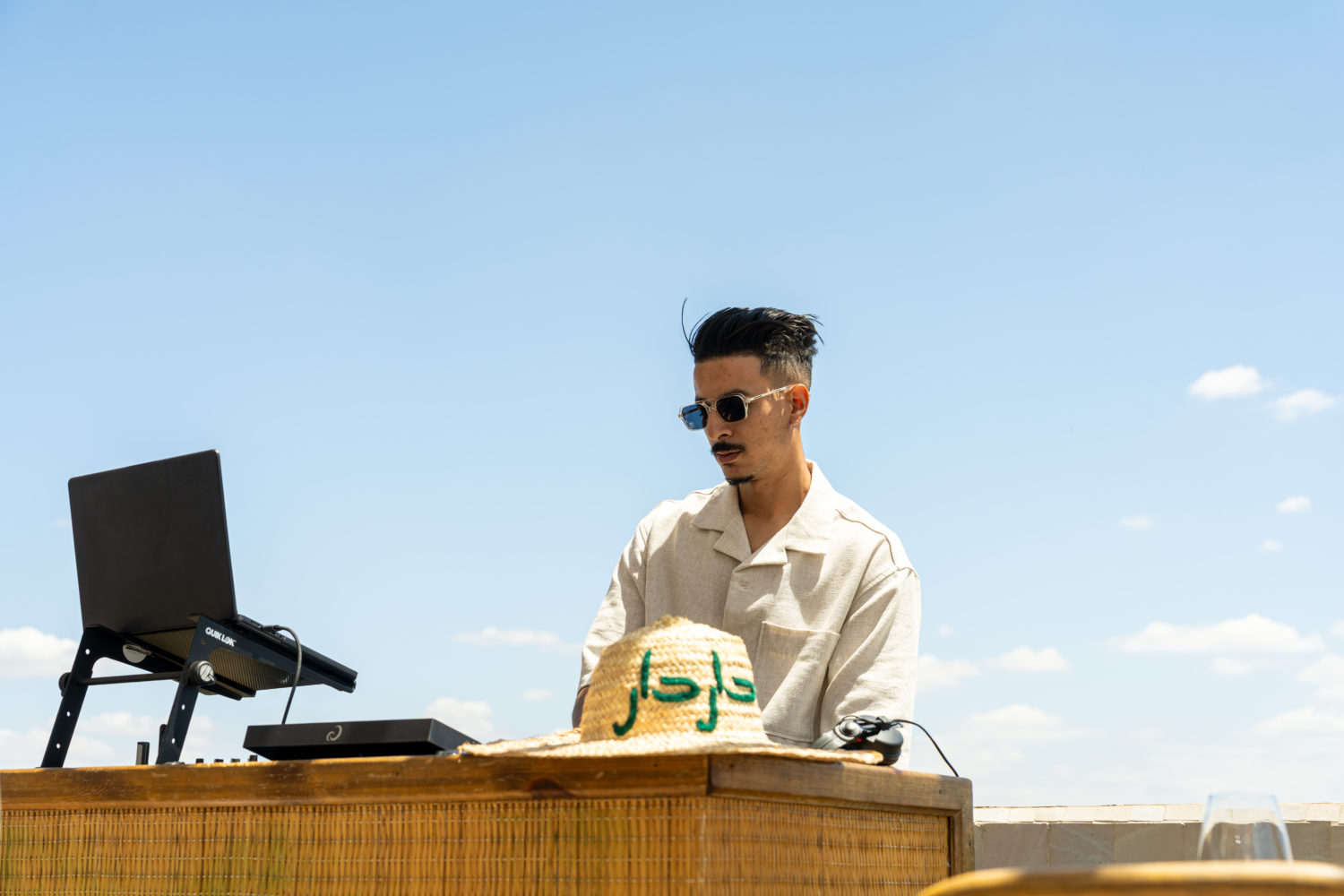
The restaurant to build the weekend around is Dar Dar Rooftop.
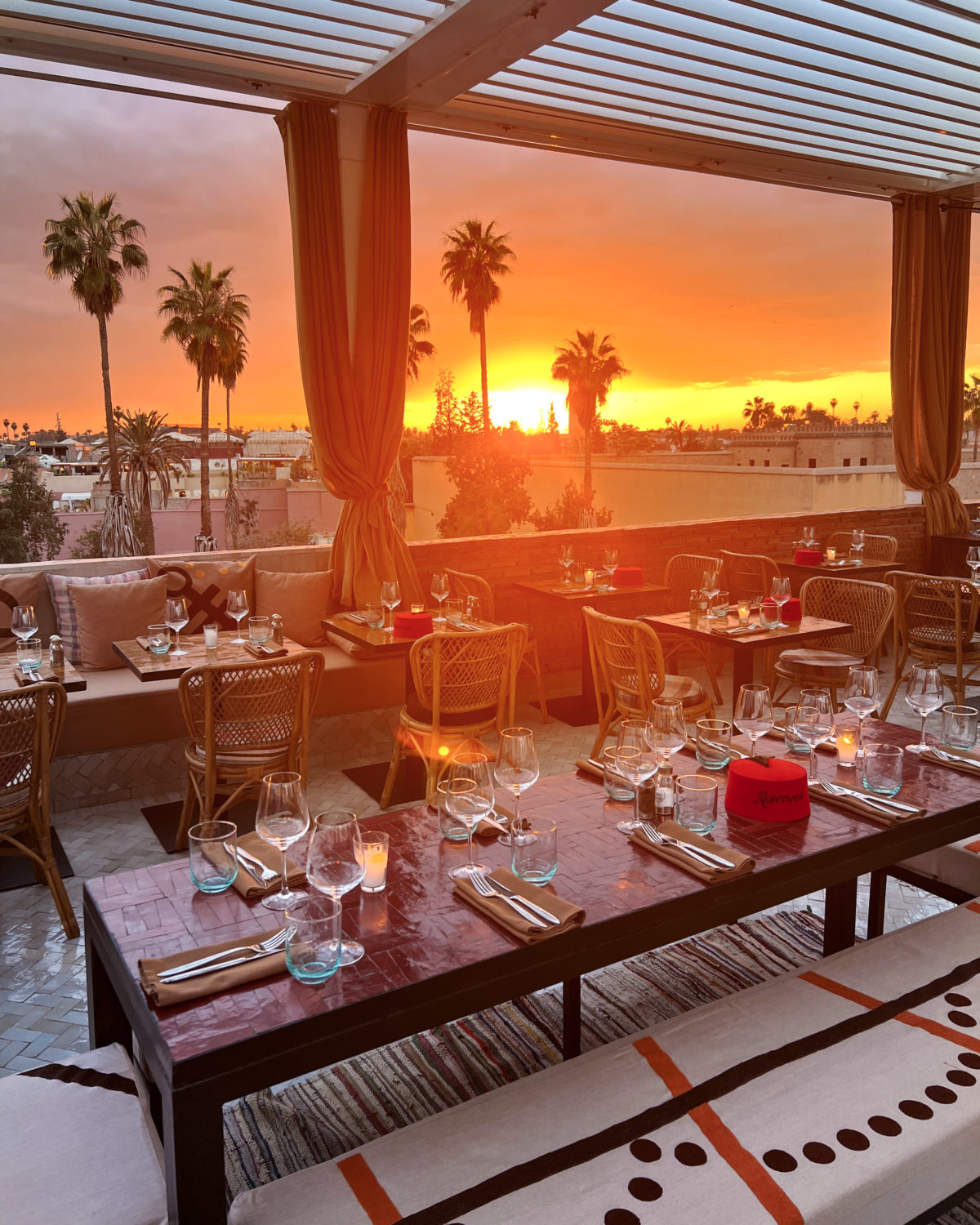
Marrakech has plenty of rooftops, but Dar Dar has the confidence of a place that knows the view is not the whole story. Set above the Riad Zitoun quarter, it gives the city shape. By day, it is open skies, sunlit plates and that lovely feeling of being just high enough above the action to enjoy it properly. By night, it softens into lanterns, cocktails, music and the Koutoubia in the distance, with the Atlas Mountains doing an outrageous amount for the atmosphere.
Dar Dar means home, twice over, but there is nothing gimmicky about it. The room is polished without being stiff, with woven lanterns, natural textures and a warmth that feels unmistakably Marrakchi. It is glamorous, but not needy. Nobody is begging you to notice the setting. The setting knows.
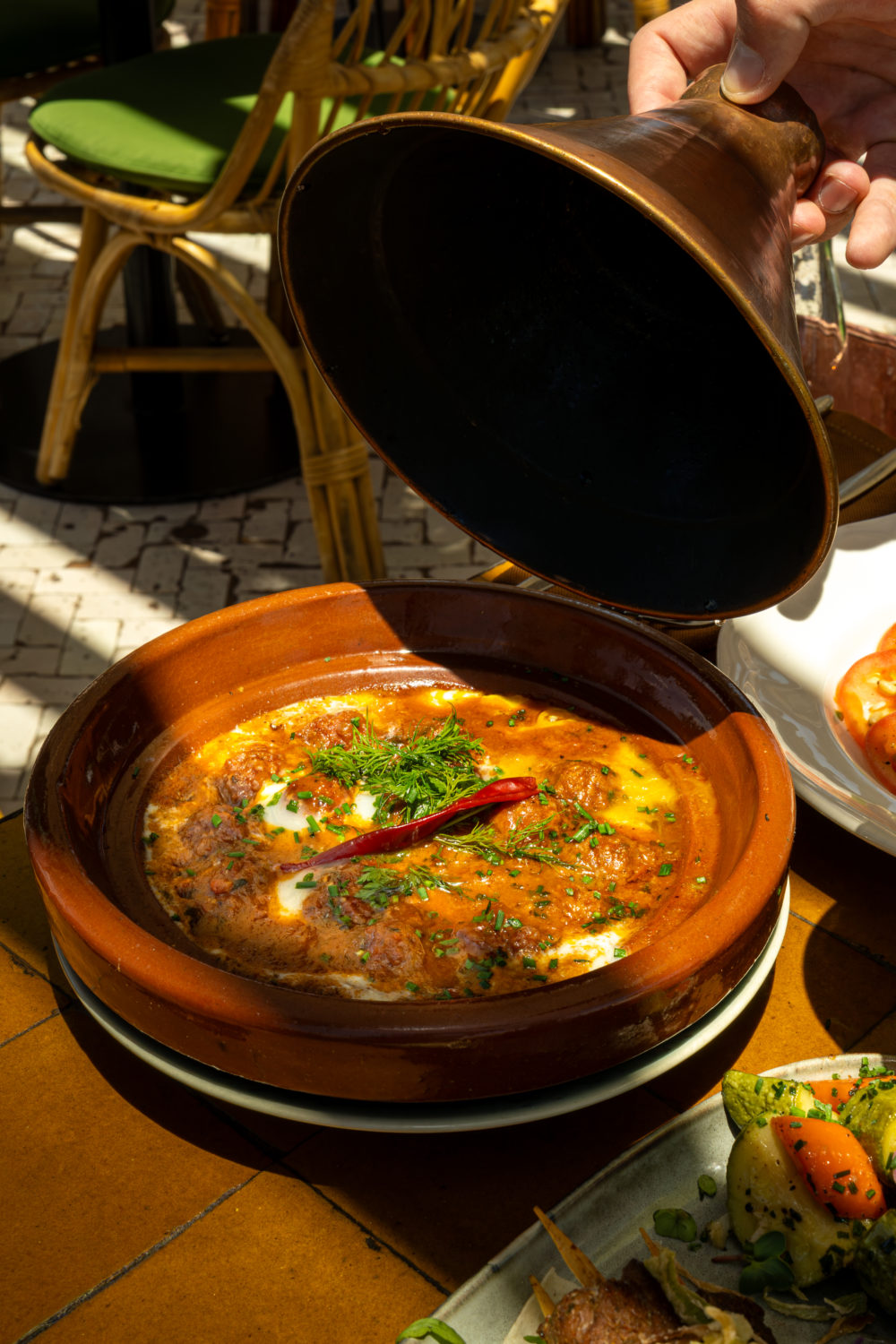
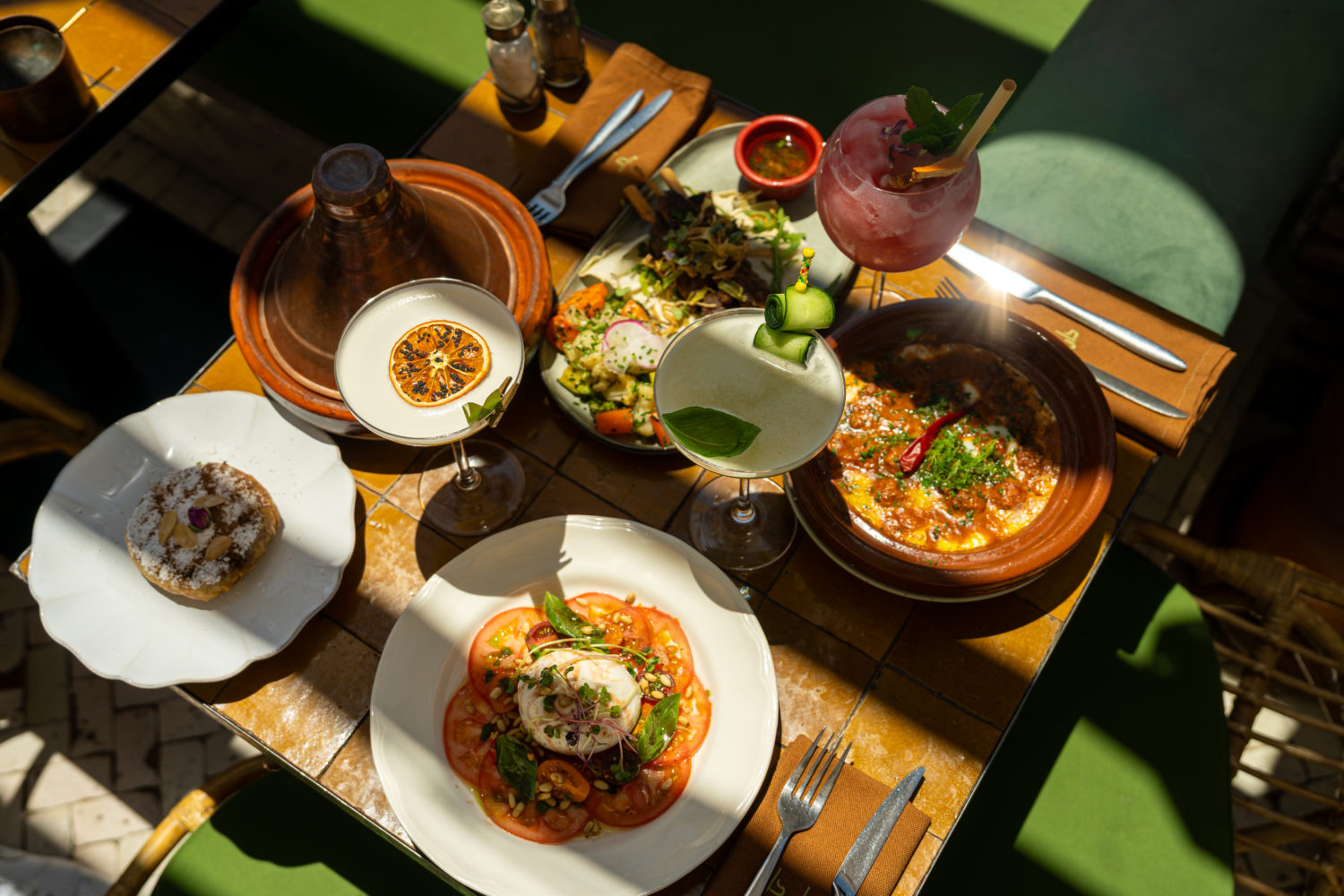
The kitchen, led by chef Aisha Dhibi and an all-female brigade, gives Moroccan cooking a contemporary frame without flattening its soul. Pastilla arrives delicate rather than heavy. Tangia brings the comfort of slow cooking. Cactus couscous offers texture and surprise. The sharing plates are generous, colourful and built for the kind of table where everyone says they are only having “a little bit” before behaving with no such restraint.
The cocktails deserve attention too. Built around herbs, citrus, spices and house infusions, they feel properly connected to the room rather than engineered for photographs. At lunch, they are bright and refreshing. By dinner, they become part of the rhythm of the evening. One more drink stops sounding indulgent and starts sounding like cultural commitment.
Dar Dar works because it captures Marrakech at its most flattering without making it feel polished beyond recognition. Lunch here is easy and sunlit. Dinner is slower, warmer and more cinematic. It is the rare rooftop that does both well.
What To Do
A first visit to Marrakech without the souks would be like going to Paris and avoiding croissants. The souks are busy, colourful, confusing and completely committed to separating you from your money in the most charming way possible.
Haggling is part of the experience, and it is best approached with good humour. Smile. Start lower than you intend to pay. Do not look too attached to the thing you have already mentally placed on your coffee table. Walking away is part of the dance, although walking away from something you genuinely want requires the emotional strength of a divorce lawyer.
Cash is essential. Carry Moroccan dirhams, ideally in smaller notes, for taxis, tips, souks and small purchases. This is not the moment to expect every stall to operate with the contactless efficiency of a London sandwich chain.
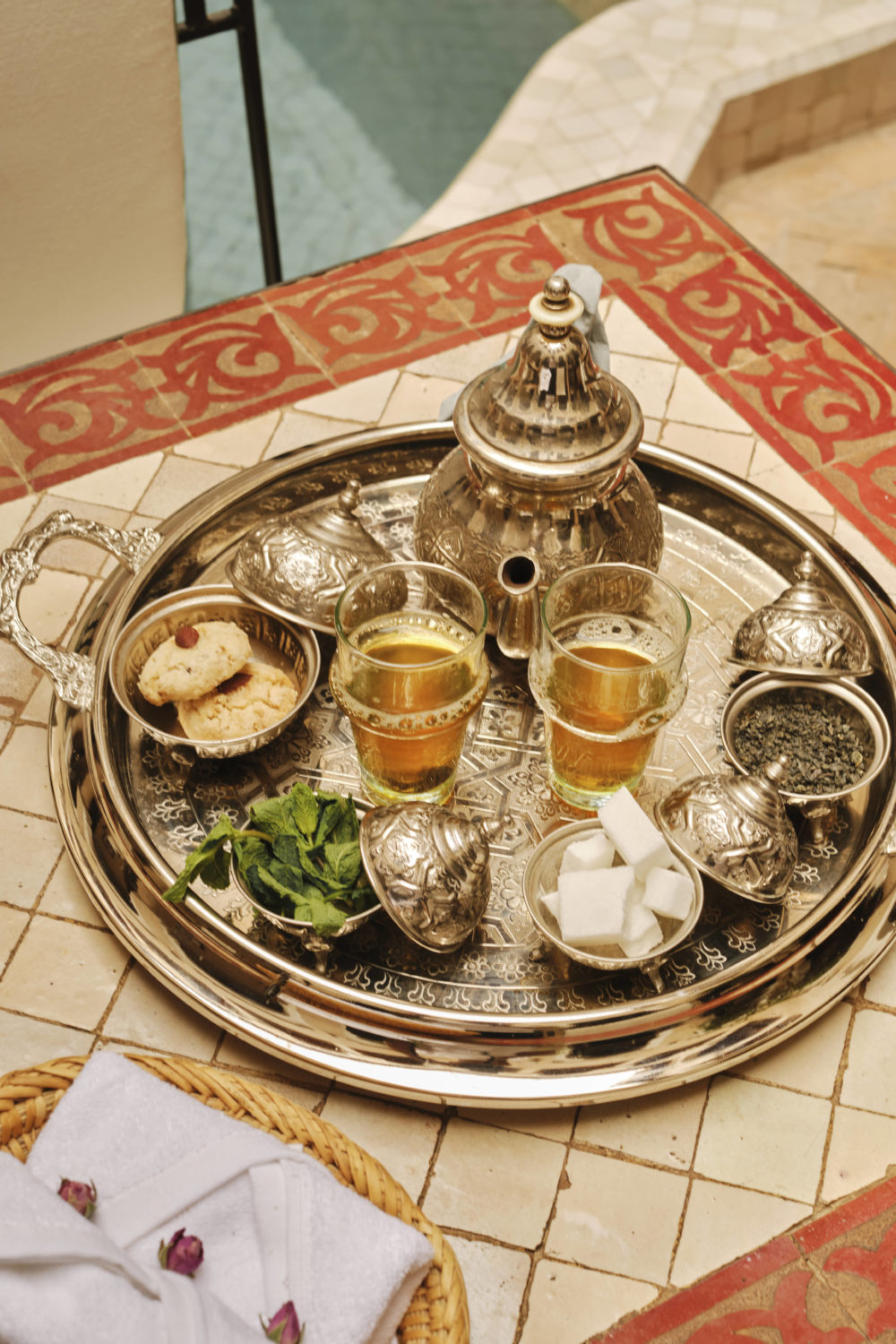
Mint tea is equally unavoidable. Known affectionately as “Moroccan whiskey”, it is poured high, served sweet and offered everywhere with the seriousness of a national treasure. At first, you accept it politely. By the second glass, you are emotionally involved. By the third, you start wondering whether you need a tea tray at home. You do not, but Marrakech is very persuasive.
Culture Stops
For a calmer kind of beauty, Jardin Majorelle is essential. Created by French painter Jacques Majorelle and later preserved by Yves Saint Laurent and Pierre Bergé, it remains one of Marrakech’s most stylish addresses. The blue is almost indecently vivid, sitting against cacti, palms, bamboo and still pools with the confidence of a colour that knows it has its own fan base.
Nearby, the Musée Yves Saint Laurent Marrakech gives the visit its fashion spine, exploring the designer’s relationship with a city that shaped his eye for colour, escape and drama. Go early, book ahead and do not pretend you are above taking the photo. Nobody is above the photo.
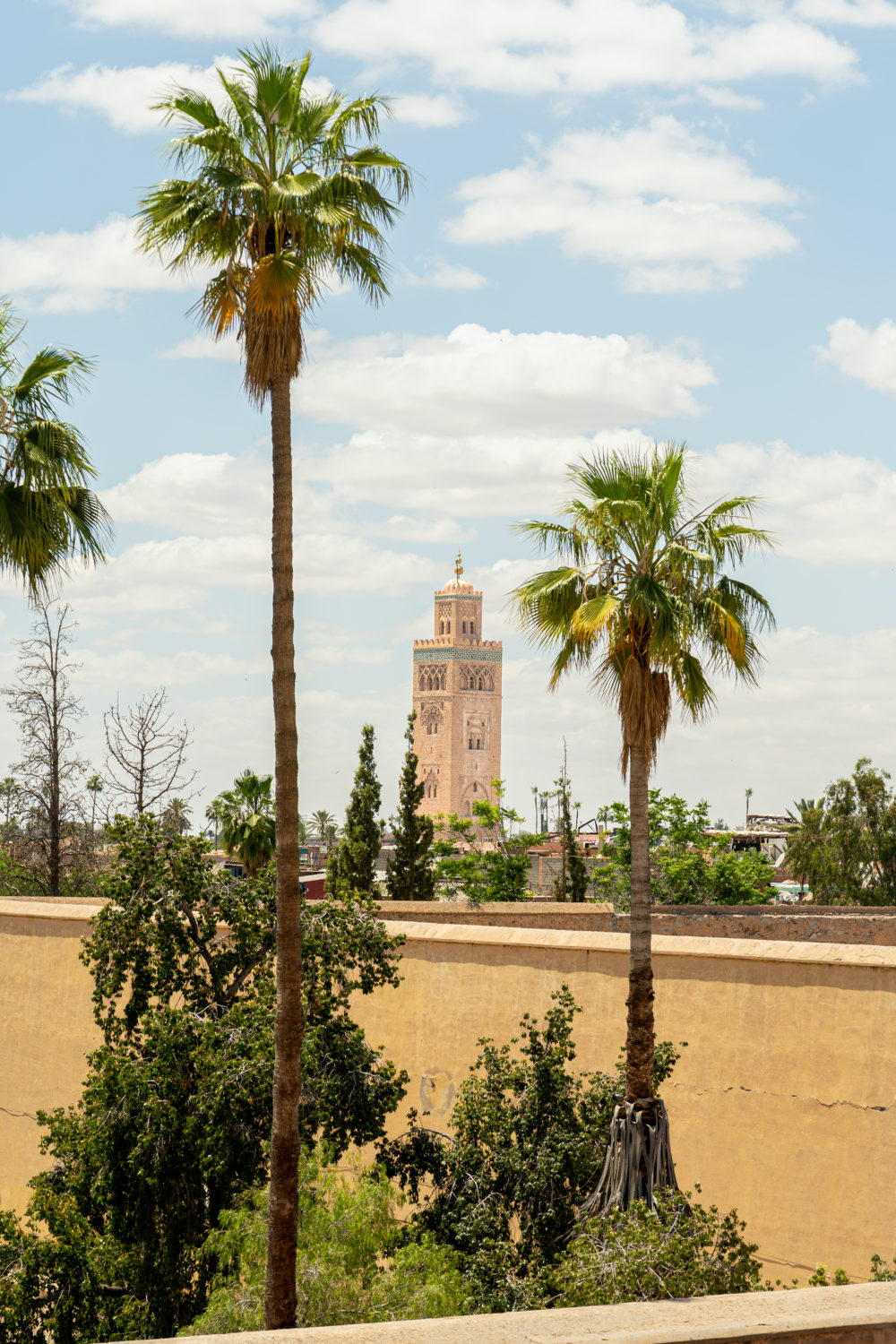
The Koutoubia Mosque is another essential landmark. Non-Muslim visitors cannot enter the prayer hall, but the exterior and surrounding gardens are worth seeing, especially when the light turns warm and the minaret seems to glow.
Cook, Scrub, Repeat
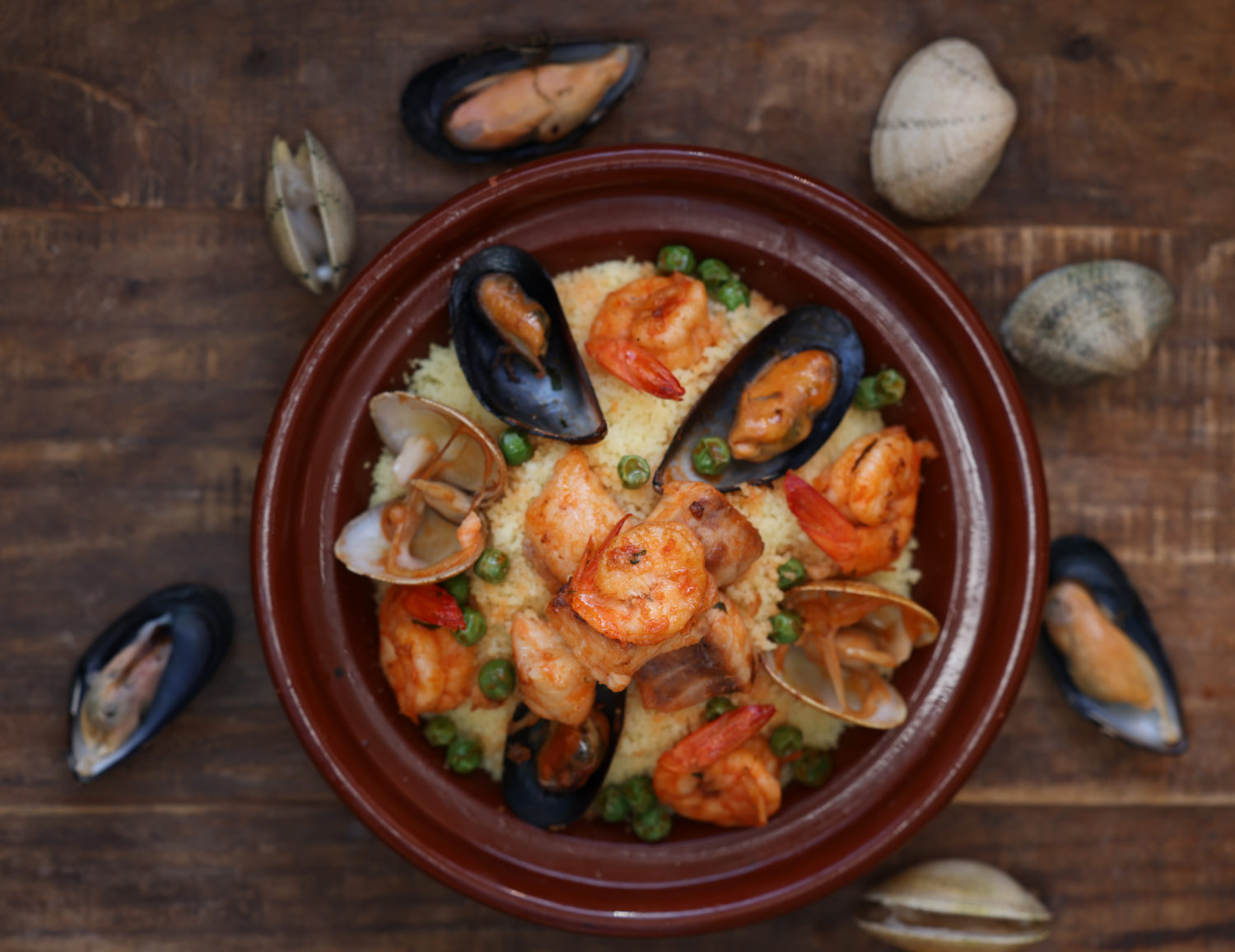
A cooking class at the Moroccan Culinary Arts Museum is one of the best ways to understand the city through flavour rather than scenery. Learning to make chicken tagine from scratch brings the ingredients into focus: preserved lemon, olives, spice, slow heat and patience.
Set within a museum dedicated to Morocco’s culinary heritage, the experience gives the dish context as well as flavour. It is part lesson, part lunch, part cultural deep dive, and a reminder that Moroccan food is not about shouting with spice. The best dishes simmer, deepen and wait for you to catch up.
A hammam should also be treated as essential. After walking, bargaining, sweating and pretending not to be overwhelmed by a man trying to sell you three belts and a tea set, few things feel more civilised than being steamed, scrubbed and returned to society with a new epidermis and a better attitude.
After Dark
By night, Jemaa El Fna is a full body experience. Snake charmers, monkeys, Berber musicians, food stalls, orange juice stands, crowds, smoke, drums, movement and people trying to sell everything from fake Chanel bags to rugs that would require their own boarding pass.
It is chaotic, theatrical, sometimes absurd and completely unforgettable. Keep your cash secure, be respectful with photographs and say no firmly when needed. The square is not polished, but it is alive in a way few places are.
What To Know Before You Go
Pack light, then remove at least three more things. Marrakech will test your suitcase and your self-control.
Dress with style but respect. Loose dresses, linen trousers, relaxed shirts and covered shoulders for more traditional settings will serve you well. Carry dirhams in smaller notes, haggle with humour, book key cultural stops in advance, and leave gaps in the itinerary. Marrakech is best when there is room for the unexpected, or at least room for a second lunch.
Forty-eight hours will not make you an expert. It will give you just enough of Marrakech to understand why everyone is suddenly talking about it, and why the city deserves more than being reduced to a trend.
Go for the rooftops, the food, the gardens, the souks and the controlled chaos. Stay somewhere that lets you breathe. Eat somewhere that lets the city look its best.
And whatever else you do, order the mint tea. By the second glass, you will understand.