In 2026, Rolls-Royce Motor Cars commemorates a remarkable convergence of milestones: three of its most visionary Goodwood-era Experimental motor cars – 101EX, 102EX and 103EX – celebrate 20, 15 and 10 years respectively since their unveiling. Together, they form a defining trilogy of innovation, charting the marque’s evolution from analogue mastery to electric and autonomous futures.
Experimental, or EX, motor cars occupy a singular position within Rolls-Royce’s lineage. They are not speculative concepts designed to test market appetite, but fully realised, drivable expressions of intent – crafted from a profound understanding of clients’ desires and a clear vision of what lies ahead. Each EX motor car serves as both a statement and a proving ground, allowing engineers to explore advanced technologies, new materials and bold design directions that ultimately shape production models.
This philosophy traces back over a century. The first, 1EX, was created by Henry Royce in 1919, establishing a tradition of experimentation that would quietly underpin the marque’s most celebrated achievements. From the lightweight 26EX, which informed the coveted Phantom II Continental, to the V12 development cars of the 1930s – codenamed Spectre – these experimental machines have consistently translated innovation into enduring legacy. Today, that lineage finds modern expression in Spectre, the marque’s first fully electric motor car.
101EX: The Genesis of Modern Bespoke (2006)
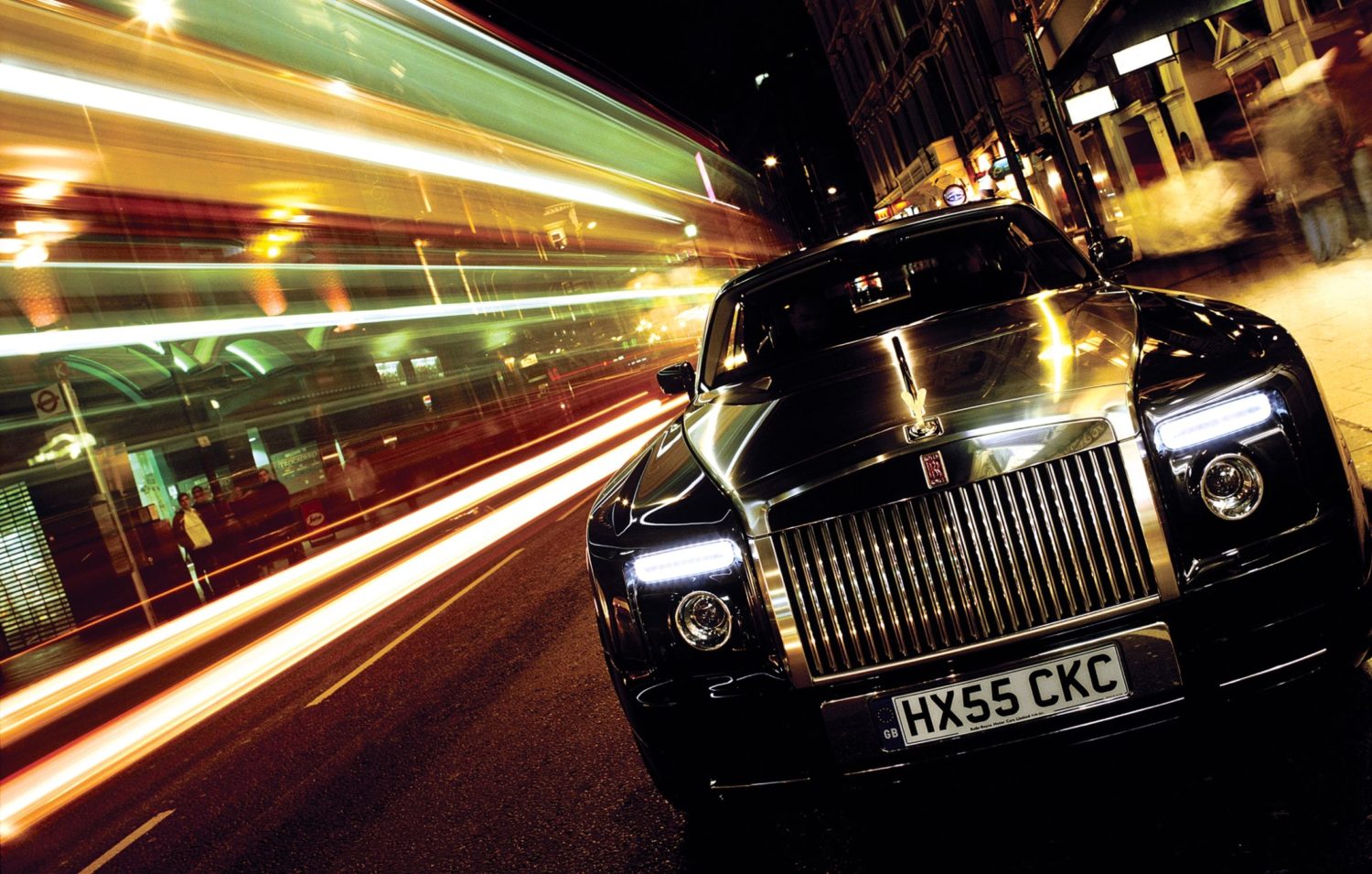
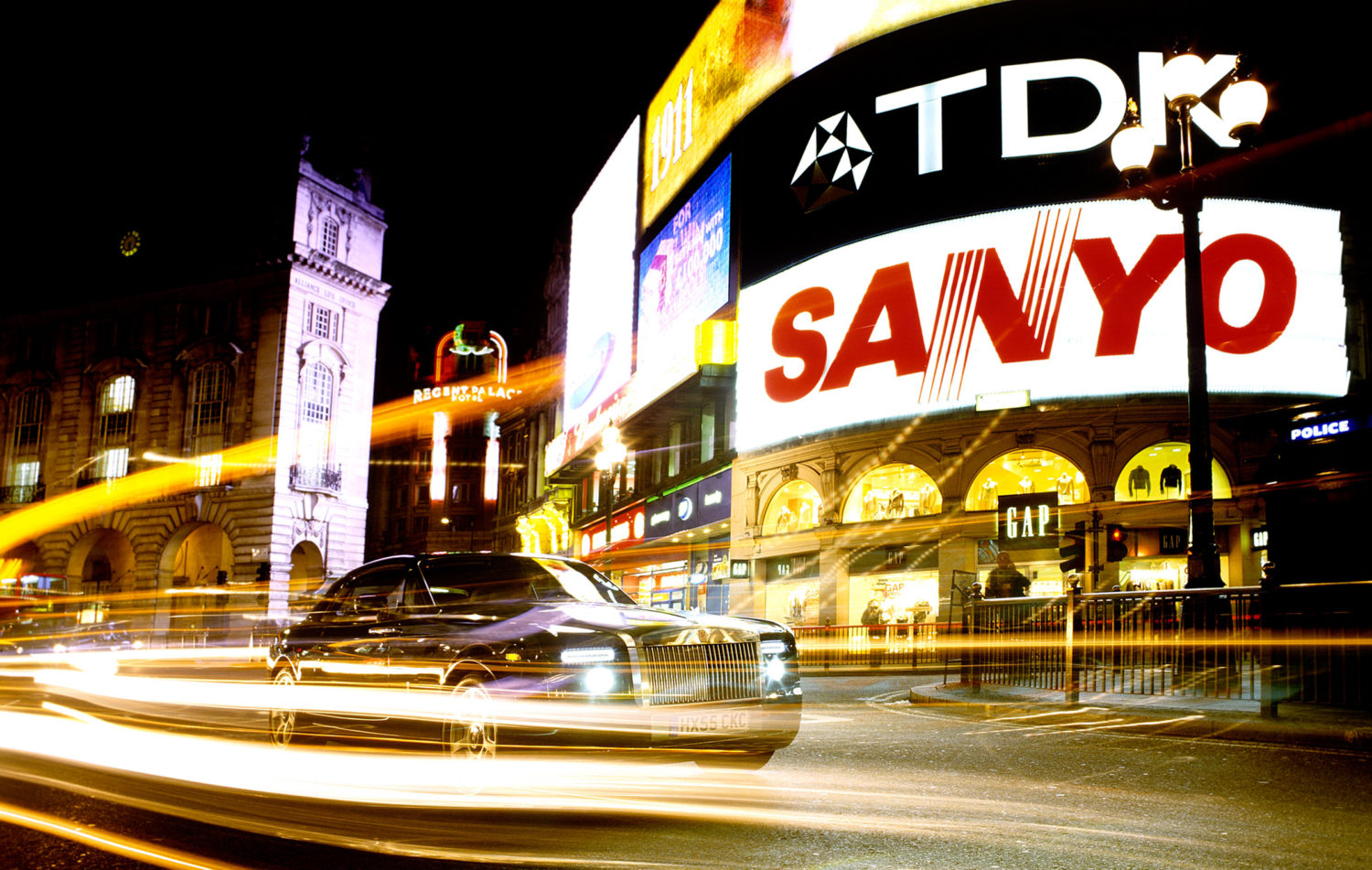
Rolls-Royce 101EX made its debut at the 2006 Geneva Motor Show, presenting a more dynamic, driver-focused interpretation of Phantom VII. Shorter, lower and crafted with carbon fibre composite bodywork, it combined performance intent with unmistakable Rolls-Royce presence.
Inside, it introduced what would become one of the brand’s most iconic signatures: the Starlight Headliner. A constellation of fibre-optic lights embedded within the roof lining, it transformed the cabin into an immersive, celestial space – now a defining hallmark of Bespoke craftsmanship.
101EX would evolve into the celebrated Phantom Coupé (2008), alongside the Phantom Drophead Coupé, both of which expanded the marque’s identity as a modern House of Luxury. It also laid the groundwork for the rebirth of Coachbuild, culminating in the singular, exquisite Sweptail in 2017.
102EX: The Electric Pioneer (2011)
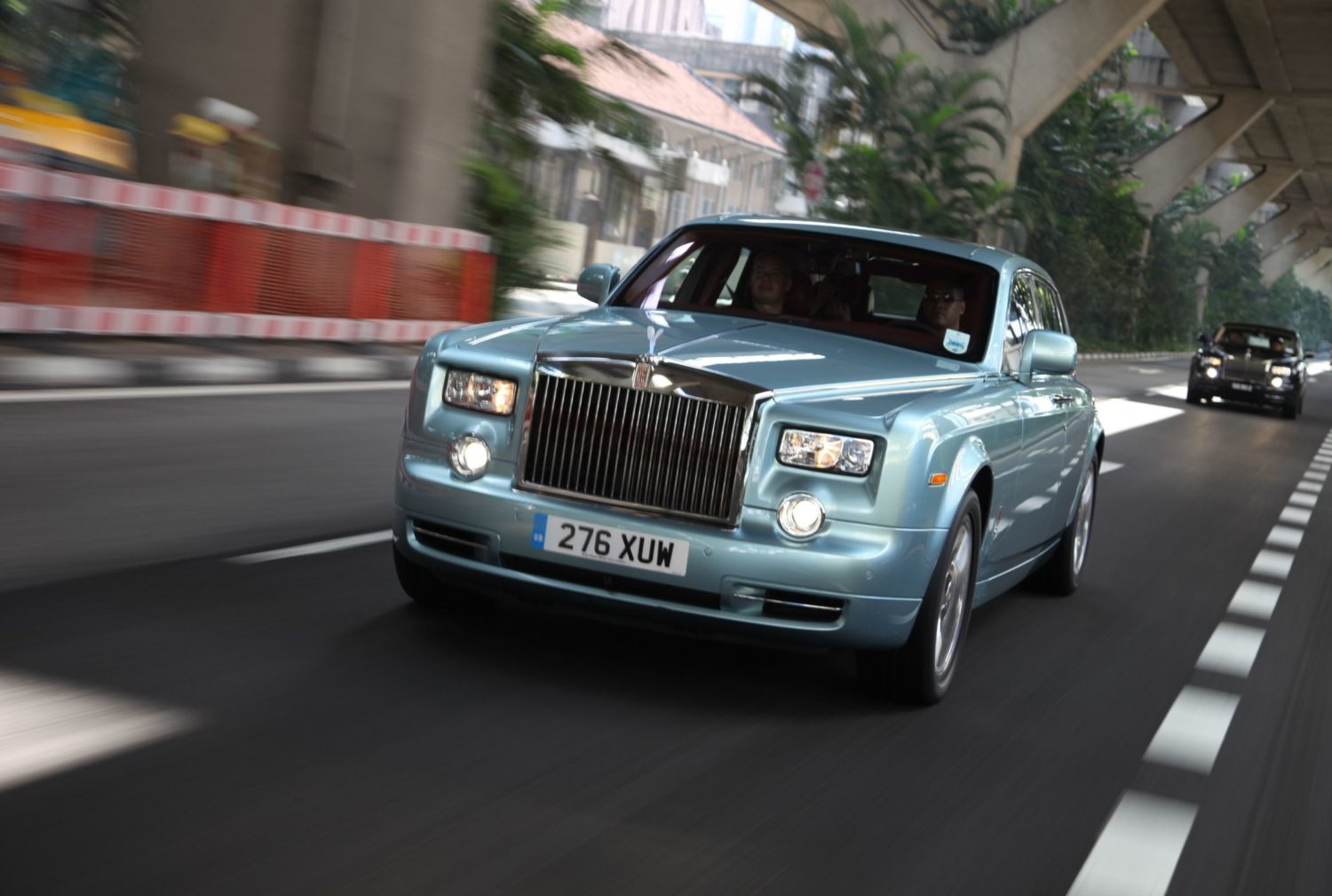
Rolls-Royce 102EX holds a unique place in the marque’s history as its first fully electric motor car. Known as the Phantom Experimental Electric (EE), it was conceived as a working testbed for battery – electric propulsion – long before electrification became an industry imperative.
At the time, it featured the largest automotive battery ever installed, alongside pioneering wireless induction charging technology. More fundamentally, it required a complete reimagining of vehicle systems, transitioning everything from steering to climate control to battery power.
Following its debut, 102EX embarked on a global tour, gathering invaluable insights from clients, media and enthusiasts. These learnings would prove instrumental in shaping the development of Spectre, whose extensive testing programme – spanning over 2.5 million kilometres – would later refine Rolls-Royce’s electric future.
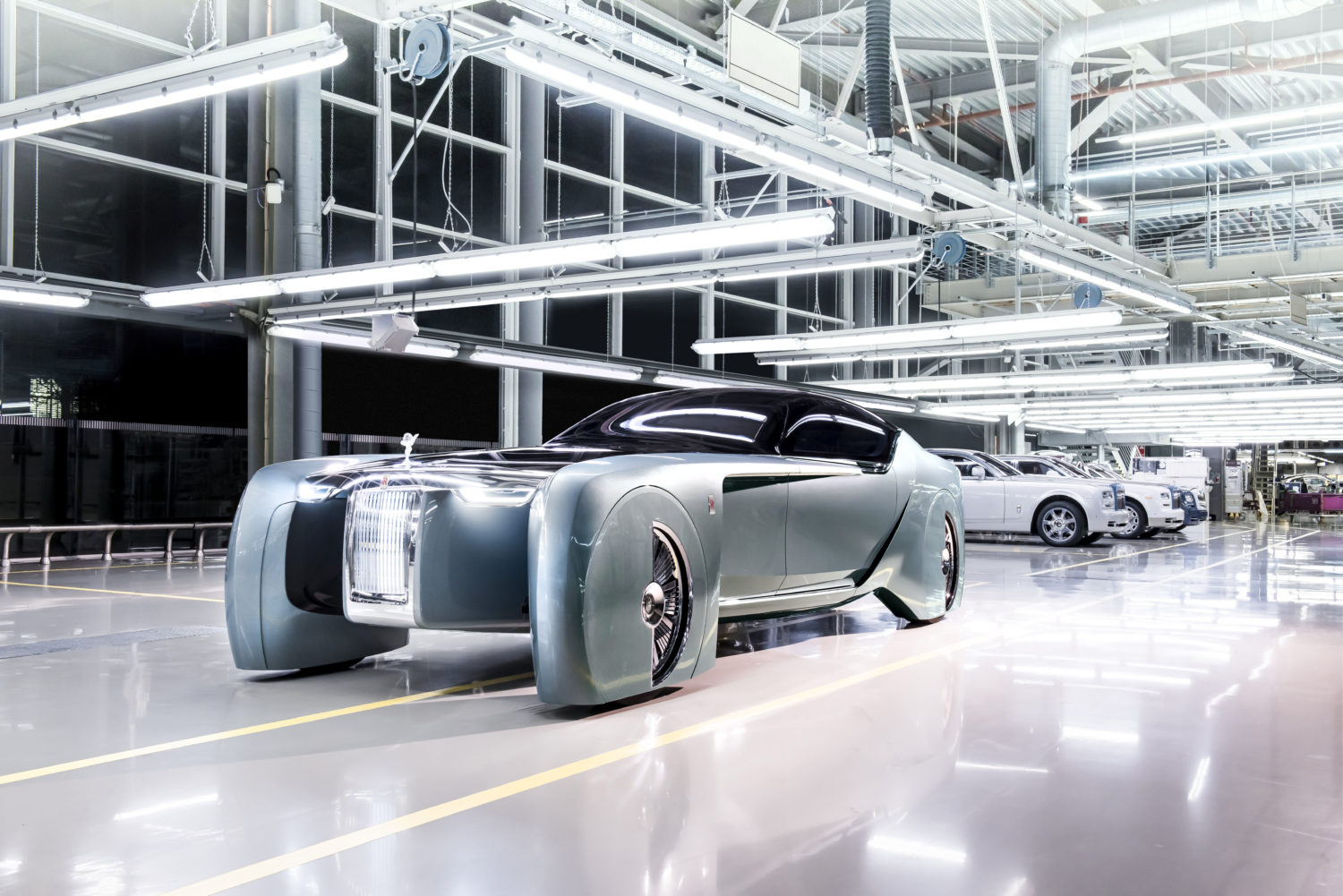
103EX: A Vision of Effortless Luxury (2016)
Unveiled in 2016, Rolls-Royce 103EX offered a bold, uncompromising vision of the future. Entirely electric and fully autonomous, it reimagined the motor car as a seamless extension of its owner’s lifestyle.
Its interior, known as the Grand Sanctuary, replaced traditional seating with a sculptural sofa that appears to float within a cocoon of light and refined materials. At nearly six metres in length, it delivers an unmistakable sense of occasion – redefining the very notion of arrival.
At its core was ‘Eleanor’, a digital assistant inspired by Eleanor Thornton, muse to Charles Sykes. Designed to facilitate autonomous travel and personalised interaction, Eleanor anticipated the connected luxury ecosystem now embodied in Rolls-Royce’s Whispers platform.
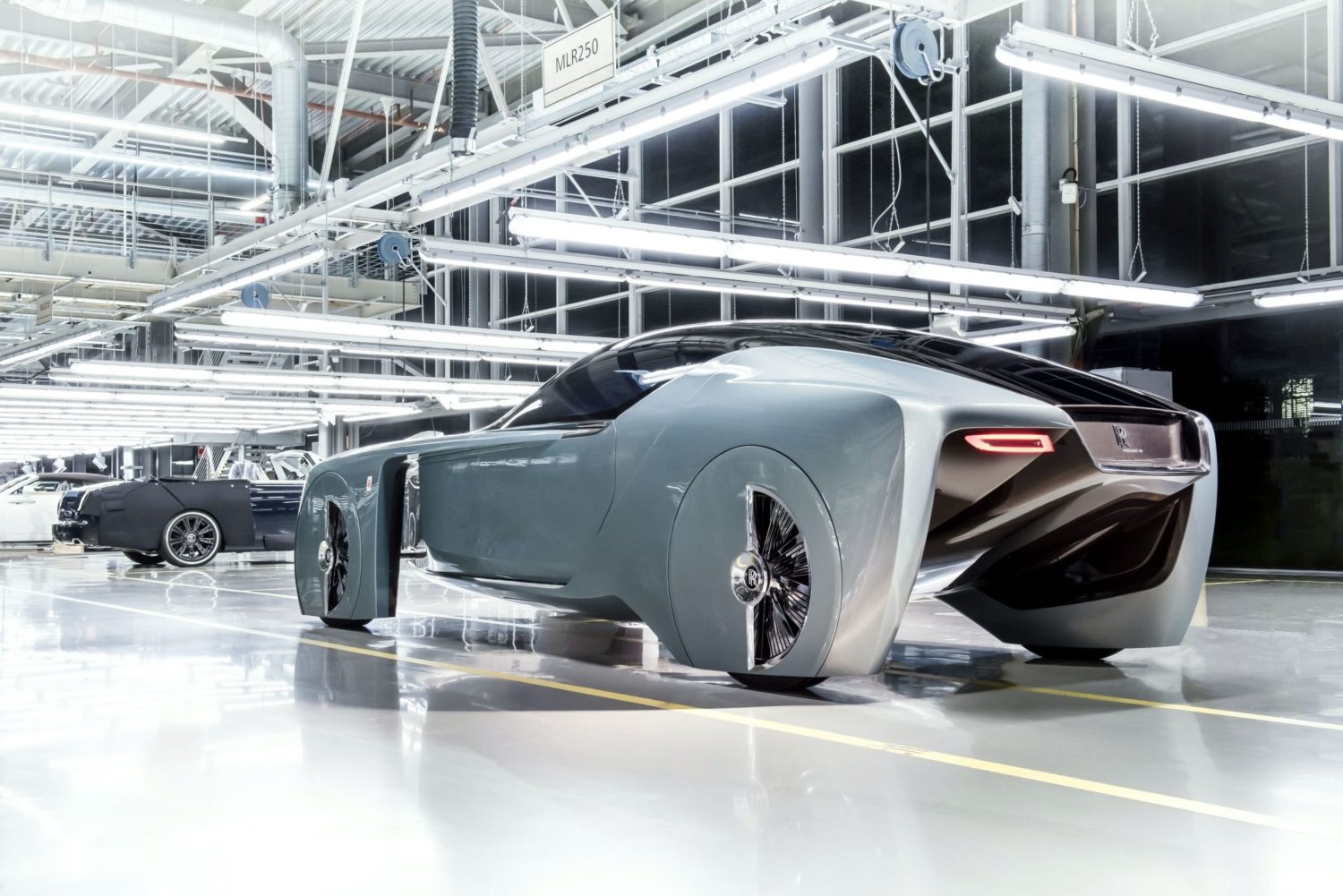
Despite their distinct purposes, these three experimental motor cars share a rare and symbolic detail: the red Rolls-Royce badge. First seen in 1905, the red ‘double R’ predates the now-familiar black emblem and has only reappeared on exceptional occasions – from anniversary editions to the final Corniche models.
Its presence on all Goodwood-era EX motor cars underscores their significance within the marque’s history. It is a subtle yet powerful marker of innovation – of moments when Rolls-Royce chose not to follow convention, but to redefine it.
Together, 101EX, 102EX and 103EX form a continuous narrative of invention, craftsmanship and vision – one that bridges the pioneering spirit of Charles Rolls and Henry Royce with the boundless possibilities of the modern age.