From the small plane, the bush offers no edges, no limit, no sense of scale. Below, the Kruger National Park spreads out in every direction. We land at Skukuza, an airport that could generously be described as two rooms and a bar, passing easily through water features and statues of animals we’re dreaming of seeing, building our excitement already. Our ranger is waiting. On the short transfer to Earth Lodge, before we’ve even checked in, a pack of thirteen wild dogs crosses the track. Most people spend entire safaris without seeing one. We haven’t even started yet.
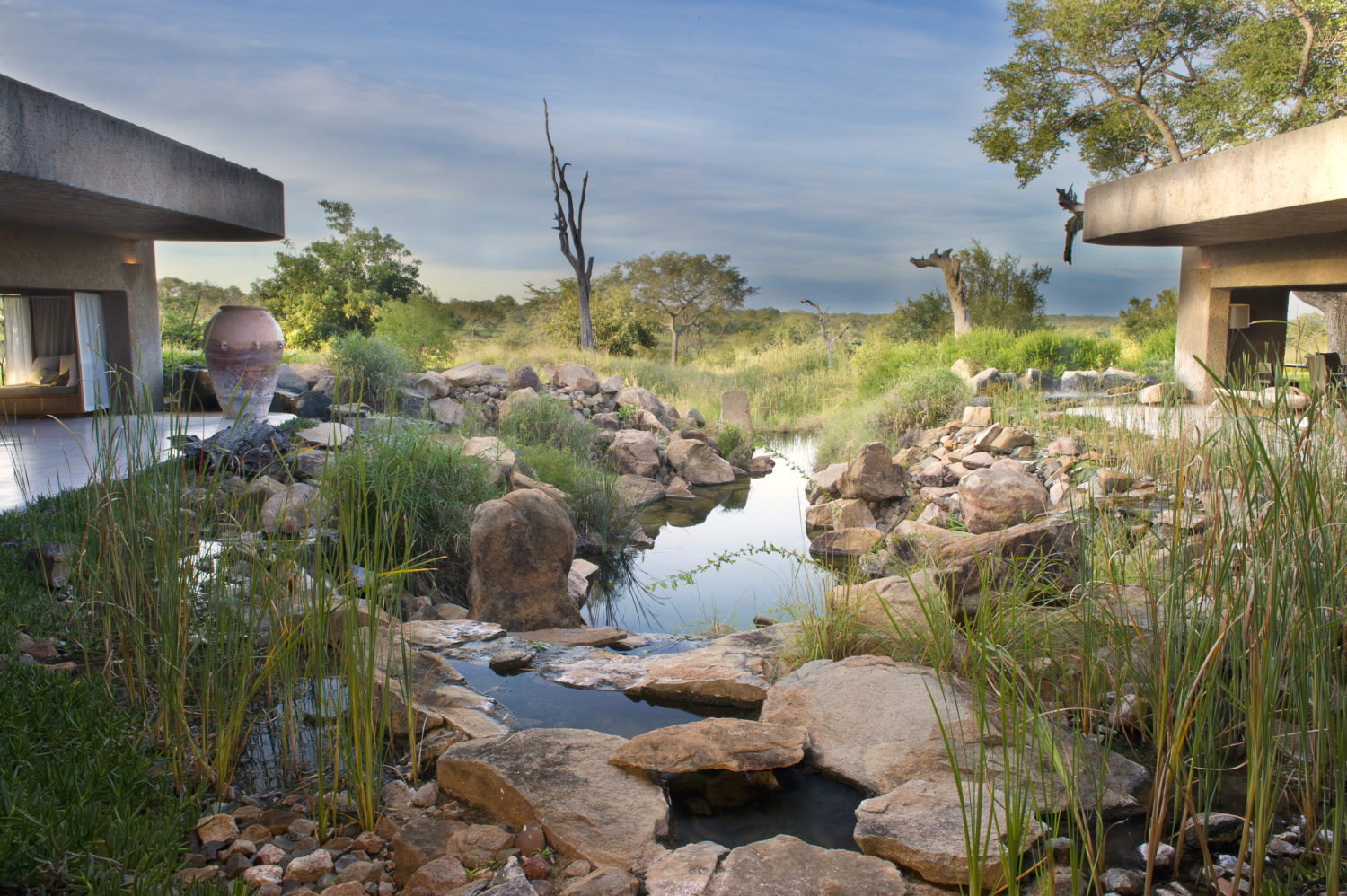
Earth Lodge sits low into the landscape like it was always there. The lodge was shaped in response to a catastrophic flood that tore through the Sabi Sands in 2015, when the Msuthlu River burst its banks and rearranged the land. Instead of building away from that history, the designers built with it. Salvaged driftwood frames the boma area and wraps around the water features that now trickle from the rooftops, mimicking the flow that once caused havoc here. The building reads like a natural animal hide that happens to serve zebra fillet with Pinotage.
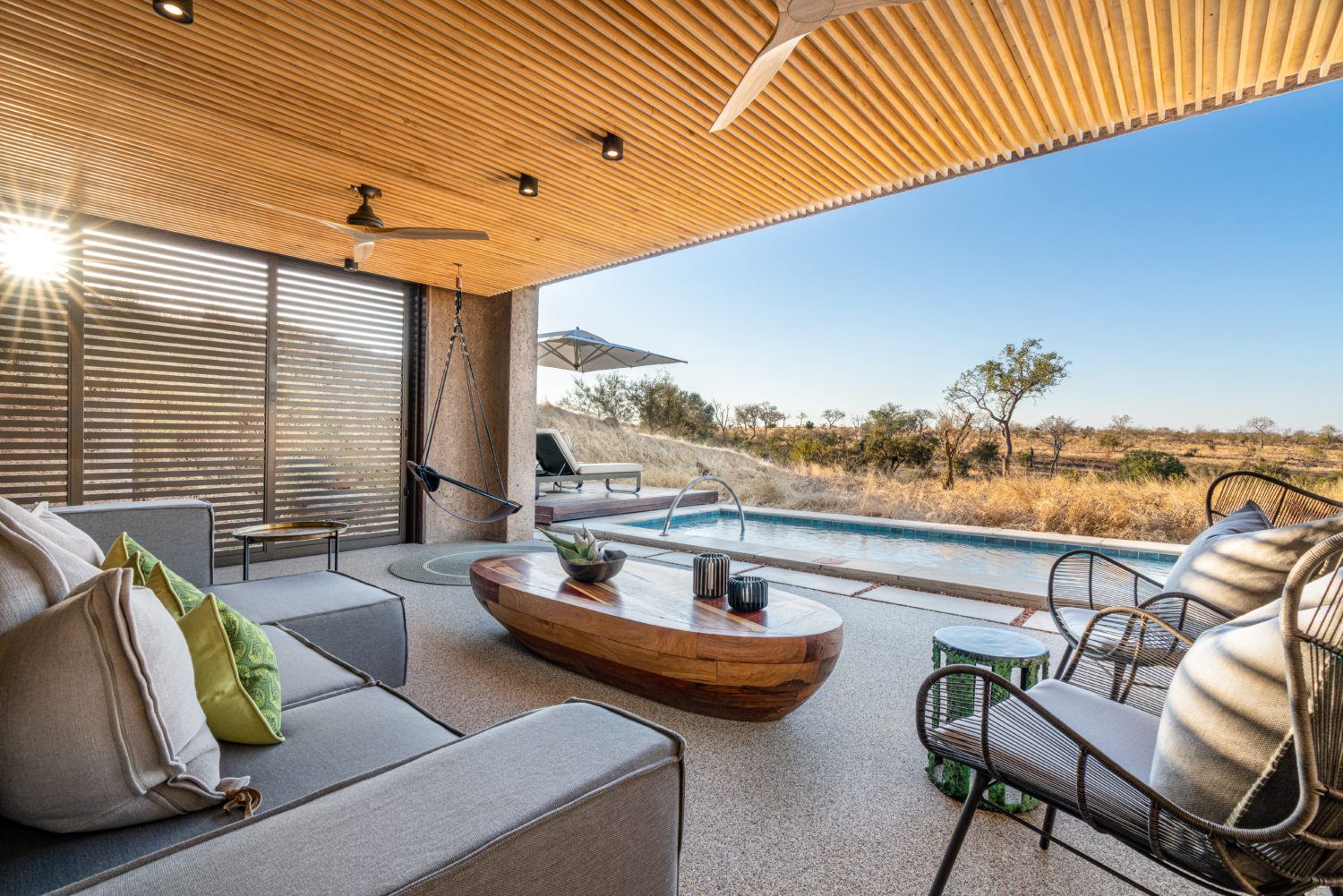
The suites are enormous – a deep tub overlooking the bush, complimentary bar, more space than you can possibly use, and a swing seat on the deck above the private plunge pool. What makes the suite is what’s beyond it – the bush backing directly onto the deck with no fence, no distance, no buffer. Waterbuck and kudu pass through regularly. Elephants have been known to visit the pool. Hippo and elephant calls from the dam carry through the walls at night, or through the windows if you’re brave enough to leave them open. A guide checks the path before you walk to dinner – a genuine acknowledgement that the land doesn’t recognise the lodge’s boundaries, because there aren’t any.
The rhythm of the days settles quickly and becomes addictive fast. Out before dawn, each car stopping in the field for coffee with a splash of Amarula from the rangers – a more effective alarm clock than anything at home. Back for breakfast, then the spa if you’re sensible. Lunch, high tea, out again. Sundowners become part of your character quickly: local beers, wines, cocktails somewhere well off the track while the light drops and the bush settles. The team ensures every guest experiences at least one boma – a communal barbecue buffet around an open fire that pulls everyone together in a way the rest of the week, focused as it is on privacy and intimacy, deliberately doesn’t. None of it feels accidental – Sabi Sabi runs this operation with real intent.
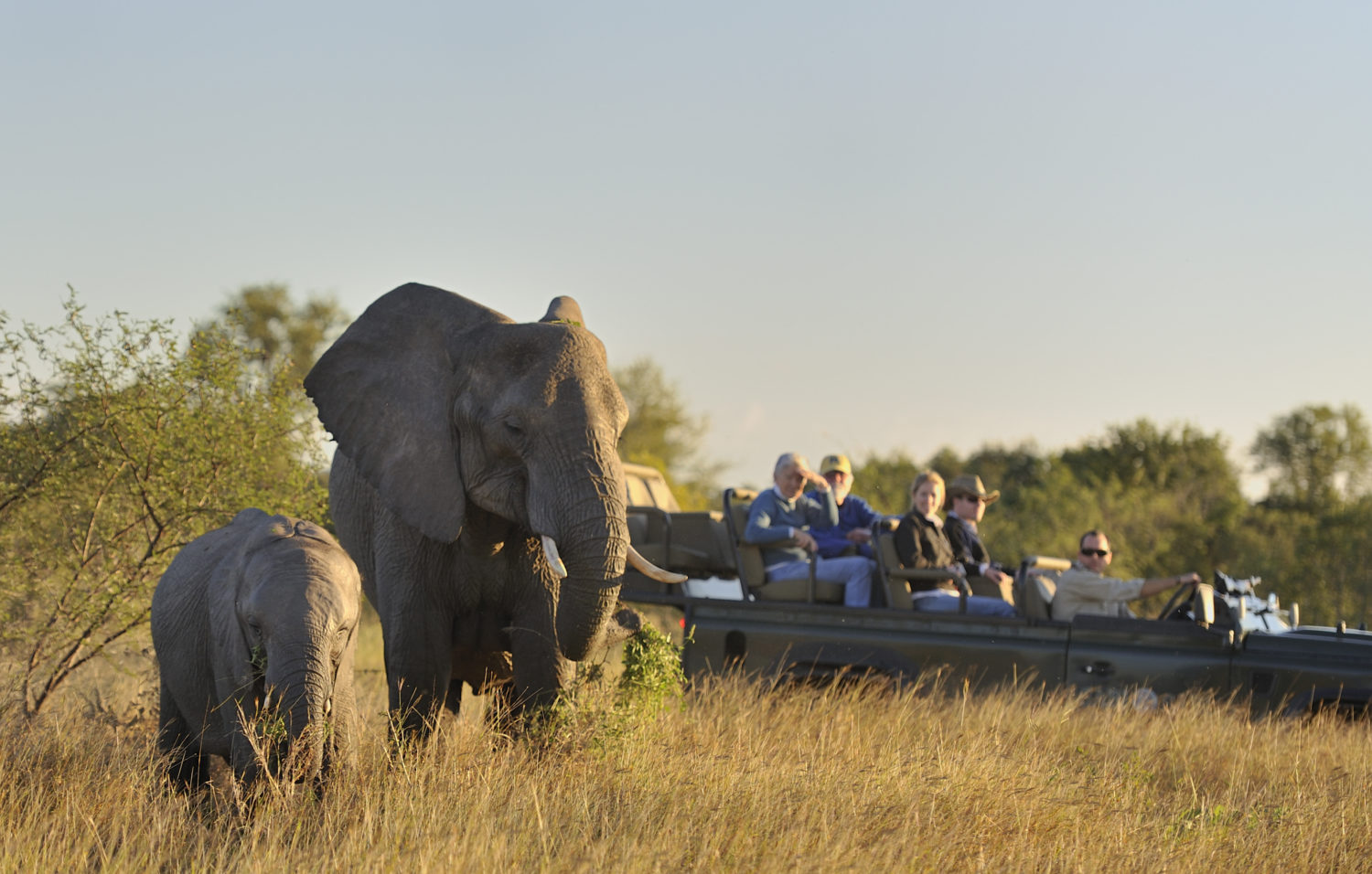
That intent shows in the safari itself. The rangers move across the reserve in constant communication, rotating positions to make sure every vehicle gets the best possible view of whatever has been found. Nobody crowds an animal. Behind all of it sits the Sabi Sabi Foundation, 45 years of serious conservation work – habitat management, endangered species monitoring, dedicated leopard research – infrastructure that makes the wildlife encounters feel earned rather than staged.
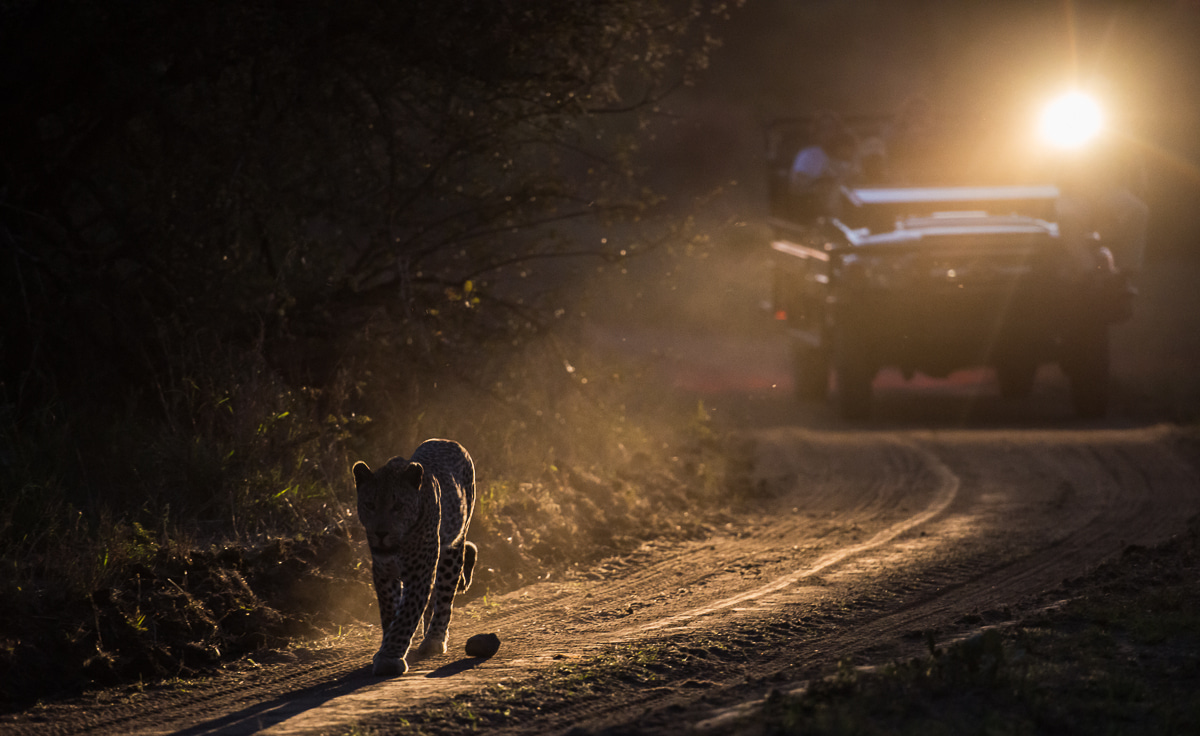
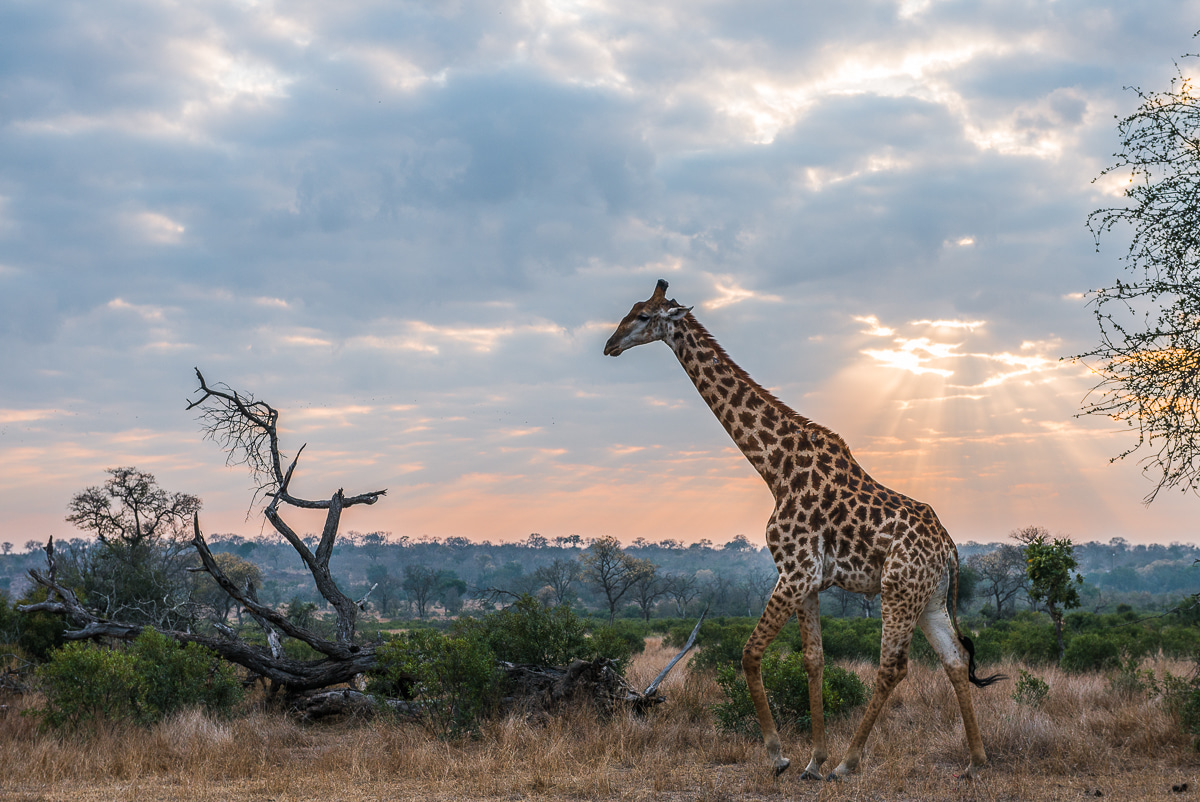
Over three days the list builds to something remarkable. The Big 5 arrive without being chased – elephants in great herds, enormous bulls alongside calves still working out what their trunks are for. A lioness in the track on the first afternoon, unhurried, disappearing on her own schedule. Buffalo on the transfer to the airport. Giraffe and zebra grazing together in a canopy of trees that looks too arranged to be real. Three young male lions sleeping in the road, not yet a coalition. A leopard at night, tracked by spotlight, the sound felt in your chest. Rhino on the first morning, the ranger talking quietly about the work that’s gone into keeping the population alive.
The third afternoon belongs to the wild dogs. We find the pack again – the same thirteen we encountered on arrival – and settle in to watch them move. They hunt as a group and the reserve knows it. Nine hyenas materialise from the surrounding bush, trailing the dogs in the hope of an easy meal. What follows is less a standoff and more a full territorial battle: biting, circling, flanking, separating weaker members, the noise carrying across the plain making our hair stand up. No kill was made – the dogs were surrounded before they had the chance. We stayed for close to an hour in complete silence, mouths hanging open, which says all it needs to.
On the final morning we come across two lionesses playing together in the early light, completely unbothered by the vehicle, moving through the bush with the loose, domestic ease of animals that have never had a reason to be afraid of very much. It’s a scene I’ll have burnt into my memory for the rest of my life.
The food at Earth Lodge needs a mention as it was so good, I took home their recipe book. Dinner on the second night is taken in the wine cellar with our ranger as a guest – our group seated at a long wooden table salvaged from that same flood, surrounded by over 6,000 bottles of South African wine. The meal works through beef tataki and zebra fillet and finishes with a caramel chocolate torte and macadamia ice cream, each course paired with something from the cellar. It would be a memorable dinner anywhere. Down there, it’s something else entirely.
Earth Lodge was our home, but the Sabi Sabi Collection runs to four properties across the reserve – Bush Lodge, Selati Camp and Little Bush Camp each with their own character and level of exclusivity – with Sandringham due to open later this year as the newest addition, eventually with its own private airstrip.
For us, three nights was the right amount of time on safari – we left having seen everything, wanting more, which is exactly how it should feel. Cape Town is a deliberate gear change – different pace, different pleasures, and considerably easier on the budget than extending the lodge stay. A wine safari at Klein Constantia sets the tone: vineyards across the rolling hills in the shadow of Table Mountain, then down into the cellars for a private tasting of the estate’s best lines.
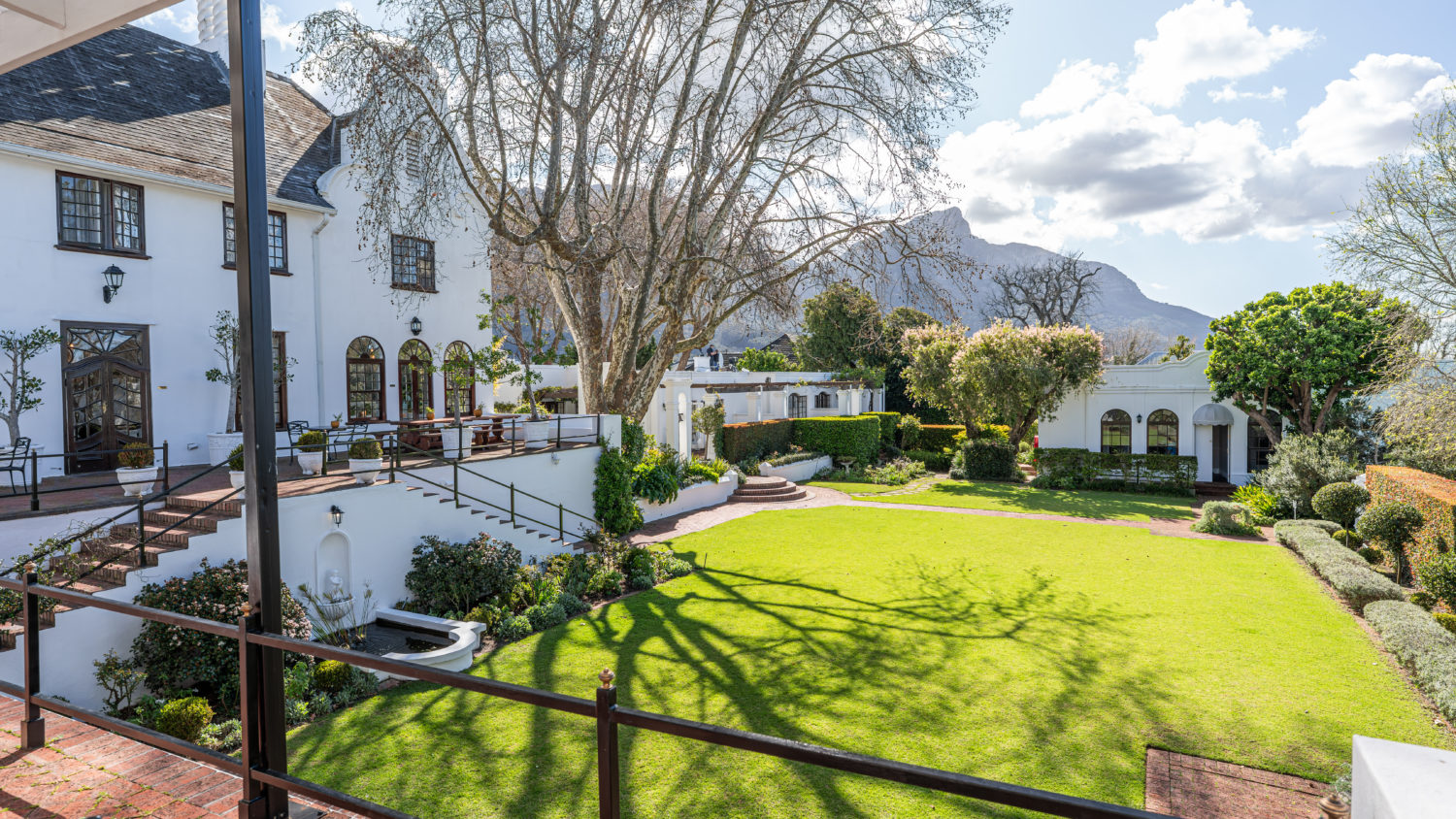
The Claremont Boutique Hotel is the newest addition to the Sabi Sabi Collection – a 15-room, adults-only property in the southern suburbs, housed in a restored Cape Dutch Revival manor whose original sash windows, timber floors and period fittings have been left largely untouched. Outside, a manicured lawn sits against the whitewashed main building with the quiet precision of an English country estate that ended up in Cape Town. The 1928 Craft Bar is worth the time. The bar staff are knowledgeable, genuinely keen for a conversation and love to be challenged, making for a fun and messy evening. Kick it off with the Sabi Signature cocktail – Inverroche amber gin with Kalahari aperitif, assembled like a negroni but rooted entirely in African ingredients.
Veld & Vine, the hotel’s restaurant, draws on the Western Cape’s produce with conviction. The kitchen works with L.A. Farms and The Little Fisherman, keeps its meat free-range and its seafood ethically harvested, and builds a menu around the best of the region. The Springbok carpaccio with passion fruit gel is something unique and yet so familiar to the locals. The linefish of the day – Kingklip served with beurre blanc and basil caviar – was the best dish, competing with their exquisite steak menu. The wine list benefits heavily from its position in the Constantia region, Klein Constantia among them, and you can’t go wrong.
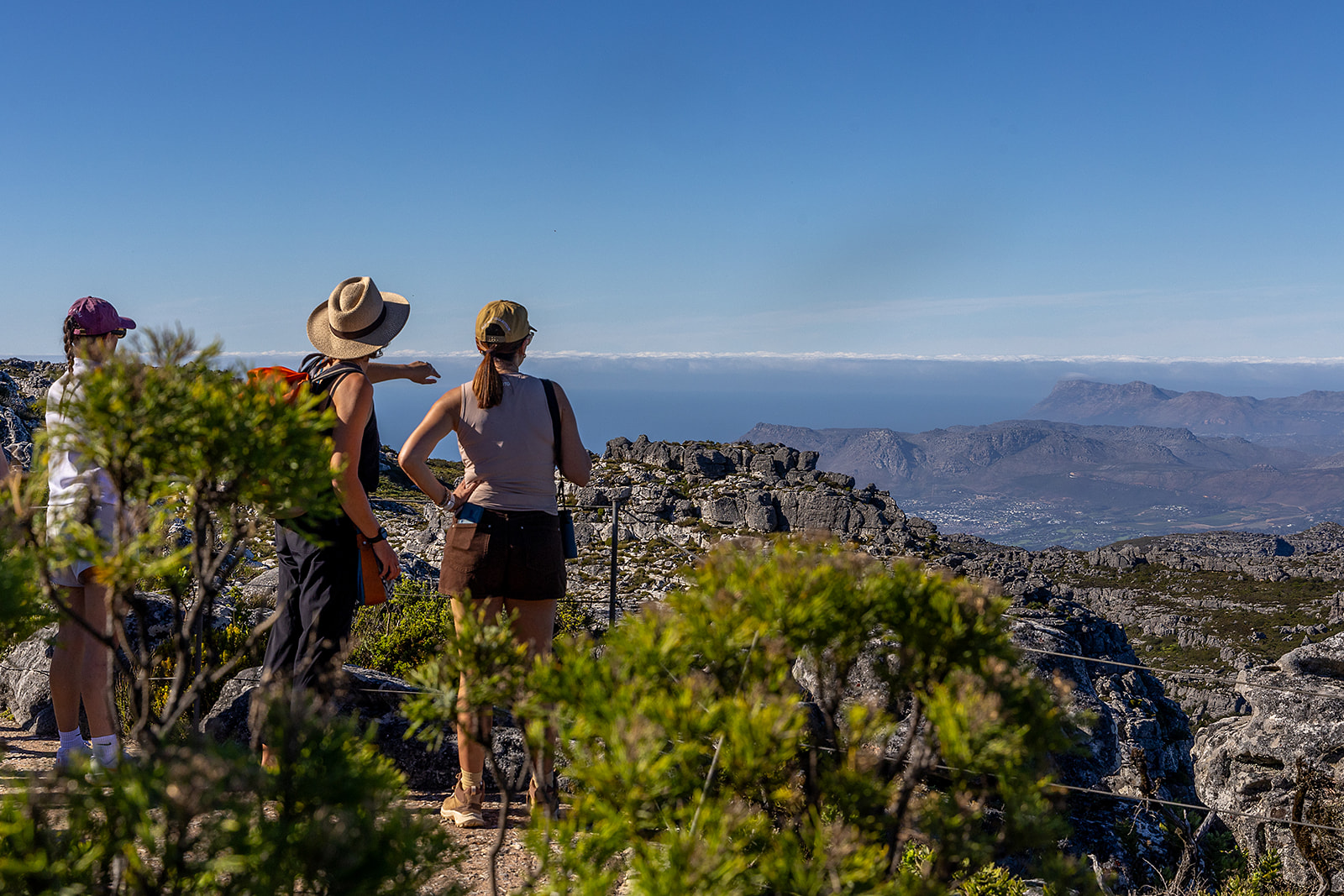
The days in Cape Town can be arranged through Escape + Explore, who work alongside the Sabi Sabi Collection to put together itineraries that reflect what a group actually wants, adapting at every turn. The Cape Peninsula route runs south through Kalk Bay, where seals argue on the harbour wall and the Olympia Cafe occupies a converted cinema. Boulders Beach produces the unexpected encounter with a colony of African penguins, even if it also causes too many Madagascar quotes. The drive to the Cape of Good Hope delivers the obligatory photograph, along with an unexpected safari of ostrich, baboons and antelope. Other days involve cycling the Atlantic coastline, working through flights of local beer at Aegir brewery, and hiking Table Mountain. The value of Escape + Explore is that none of this is fixed – the itinerary is written around who you are and what you actually want from the city, which changes everything.
Back at the 1928 Craft Bar each evening, the pace shifts appropriately. Good margheritas, unhurried service, good chat, nowhere particular to be.
South Africa as a destination is not short of options. What the Sabi Sabi Collection has built is a version of the trip that holds together as a whole rather than two separate holidays packaged together for convenience. The through-line is the staff – at Earth Lodge, at the Claremont, with Escape + Explore – committed to making sure you’re getting the best of wherever you are, whether that means coordinating across a reserve at dusk to position you next to a leopard, or recommending the right wine at dinner.
The memories tend to stay specific. A rhino, unhurried in the morning light. Thirteen wild dogs crossing a track before the first game drive had technically begun. A table in a wine cellar, something remarkable in the glass. Two lionesses playing at 6:30am, completely at ease. I know I’ll never stop wanting to go back.
Travellers’ Tales arranges trips to South Africa from £5,385 per person based on two guests travelling, with three nights at Earth Lodge, Sabi Sabi Private Game Reserve, and three nights at The Claremont Boutique Hotel, Cape Town. The package includes accommodation, activities, private transfers, VIP services, game drives, meals and beverages on safari, and domestic scheduled and chartered bush flights. International flights are not included. Virgin Atlantic flies direct between London Heathrow and Johannesburg, with return fares from £678 per person. For more information, email [email protected] or call 0203 931 5500.
@sabisabireserve | sabisabi.com