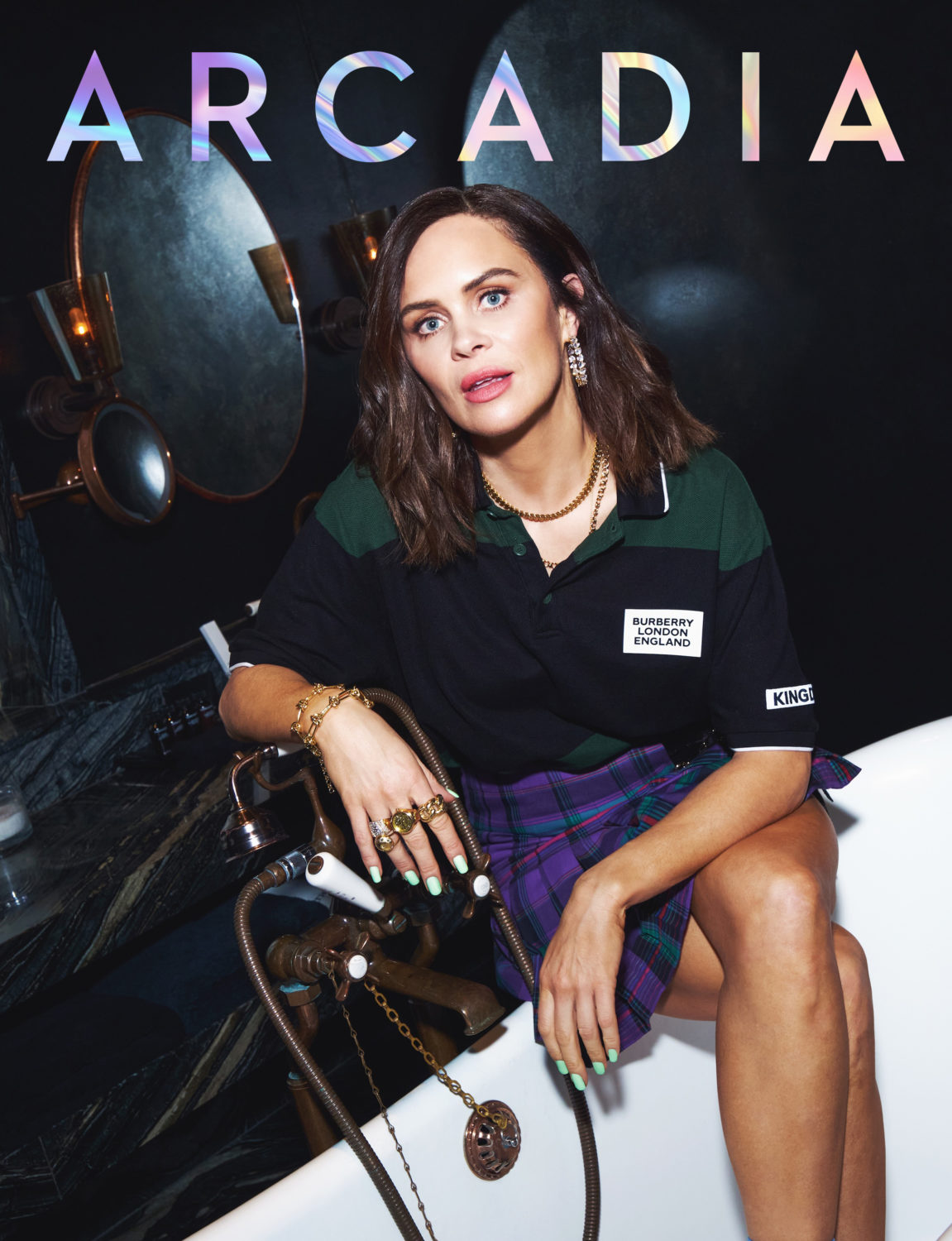
Joanne McNally doesn’t do sentimentality, but she understands momentum. When she’s asked about the tidal wave of support that has followed her across Ireland and far beyond, she doesn’t reach for a grand speech or a victory lap. Instead, she instinctively keeps moving. “It was all a bit hard when you’re in the middle of it,” she admits. “You’re kind of just in a little bubble… and then suddenly all these tickets were flying out and I just kind of ran with it.”
That understated response is part of McNally’s magnetism: a performer with arena-sized demand who still talks like someone who’s pleasantly bewildered by it all, grateful, but not starry-eyed. She’s wary of overthinking success, not because she doesn’t appreciate it, but because she knows the danger of turning joy into pressure. “I don’t overthink it,” she says. “Because then I worry I would get freaked out about it. What goes up must come down.”
And yet, in the same breath, she reveals the quiet engine behind her rise, ten years of work, a sharp understanding of culture, and a relationship with her audience that is anything but accidental. Her record-breaking run at Dublin’s Vicar Street, 78 sold-out nights, was proof of a devoted fanbase and a career built on being so unmistakably herself that audiences don’t just laugh, they feel claimed.
For McNally, the numbers speak for themselves. Her audience is overwhelmingly female, but it is far from small, and it is certainly not confined to Ireland. From Australia to the UK to North America, her shows sell out with the same energy and loyalty.
Glasgow, she adds, is reliably electric. “Glasgow always delivers.”
A Different Kind of Origin Story
McNally didn’t arrive in comedy through a straightforward creative pipeline. Before she was selling out theatres, she was what she calls an “office girl”, a nine-to-five woman with a corporate life. The shift didn’t come from ambition. It came from survival.
She speaks candidly about living with an eating disorder and the emotional collapse that followed, a period that forced her to stop, return home, and reassess everything. At the time, even the idea of recovery felt terrifyingly narrow. It frames what came next not as a cute pivot, but as a genuine reinvention.
The doorway into performance opened through a theatre project created by her friend Úna McKevitt, a play called Singlehood, where “real people” with no stage experience stood up and shared stories about their love lives. McNally said yes instantly. She’d always loved the stage, “I was always going for the lead,” she says, recalling school plays with a grin, and the moment she stepped into the spotlight, something clicked.
A comedian in the cast noticed her timing and encouraged her to try stand-up. “I was standing on stage telling a story about getting dumped, and people were laughing,” she recalls. That laugh became a turning point. “I realised then I could make a living out of this. And I just put the foot to the gas.”
But the real shift was deeper than career. Comedy offered her a reason to choose herself. “I’ll recover for comedy,” she says. “Suddenly, I had something to offer that wasn’t just my weight.”
On stage, McNally’s persona is fearless, sharp, quick, and unapologetic. Off stage, she insists, the energy dissolves into something gentler.
“I think I’d be insufferable if I were constantly the way I am on stage,” she laughs. Stand-up, for her, is a release valve. It means she doesn’t need to perform socially; she can simply enjoy the world around her. “Nothing pleases me more than going to dinner and just listening to my friends go off.”
The Craft: Chaos, Discipline, and Staying Alive on Tour
McNally’s writing process is not aesthetic; it’s functional. She’s “a notes girl,” she says, and her phone is full of chaotic fragments that may or may not evolve into a set. “I’ll open it and see something like ‘tiger shampoo,’ and I’m like, what?” she laughs, “and then a week later I have absolutely no idea what the note was about.”
Some days, she can write for hours and find nothing. On other days, five minutes produces gold. It’s frustrating, but it’s also addictive, because when a joke clicks, it feels like a small miracle. “It’s so satisfying when you get something to work,” she says. “You’re like, oh thank God.”
Touring is intense, she performs relentlessly, and she’s honest about the danger of the work becoming automatic. To keep herself engaged, she adds new material as she goes. “Every night when I go out, they’re the bit I’m most excited to say because they’re new.”
Before she walks on stage, there’s a deliberate shift. She paces, listens back to recordings, and rewrites her notes, fine-tuning rhythm and timing. Meditation music plays quietly in the background, a way to calm the noise before she creates her own. It’s equal parts ritual and discipline. By the time she steps into the spotlight, she’s locked in.
The 3 Arena: Not a Fantasy, Just the Right Time
Now, McNally is preparing to headline Dublin’s 3Arena, a venue synonymous with legends. She doesn’t frame it like “making it.” She frames it like logistics meeting inevitability.
After 78 Vicar Street sell-outs, the arena is less a leap than a recalibration. She trusts the timing. And perhaps most importantly, she trusts her audience.
Still, her instinct is always to humble herself back into the grind. She jokes that after the arena, she’ll probably go and do a tiny room somewhere purely to stay uncomfortable, because for McNally, the struggle is part of the craft. “If it’s not hard, it’s not working,” she says.
Single Women, the Zeitgeist, and Why It Hits
“There are more single women than ever before,” she says. “Fewer women are getting married, fewer women are having children, and I’m definitely a product of that generation.” Her work exists inside the same cultural shift that’s dominating conversation, decentering men, romanticising independence, rewriting the script. She isn’t mimicking it; she’s living it. Still, she’s honest about the double edge of independence. Romance has become “trickier,” she says, not because she can’t find someone, but because she genuinely loves her life. “I have a job I love, I have great friends, relationships aren’t really a priority for me anymore.”
And then the admission that feels almost too intimate for a punchline: “For now, I’m perfectly content, to a point where I’m a little concerned. Am I too content?”
Fame, But Not the Kind She Wants
McNally is not chasing celebrity as a standalone prize. She doesn’t do red carpets. She doesn’t enjoy the performance of being perceived. “You can’t get a Getty image out of me,” she laughs, referencing her publicist.
She likes her level of visibility, enough to sell tickets, enough to build a career, not so much that life becomes unlivable. “When you look at that level of fame, how is that even an enjoyable life?” she says. “It doesn’t look appealing.” The freedom, she insists, is making her own work. Stand-up means she can generate her own momentum without needing the traditional machinery of celebrity.
What She Wants Next
For a long time, McNally had one focus: stand-up. Then the pandemic arrived and made her realise how precarious a single-lane life can be. Now, with her place in comedy more established, she’s ready to branch out, carefully, intentionally.
A Netflix special sits high on the list. Acting, too. But she’s realistic, and her self-awareness is part of her charm. She doesn’t picture herself disappearing into dramatic roles; she imagines doing something close enough to her own essence to feel truthful. “Irish woman, single, no kids, in her 40s,” she says. “Me.”
When she talks about legacy, McNally doesn’t posture. She speaks about being about making it less lonely for women coming up behind her.
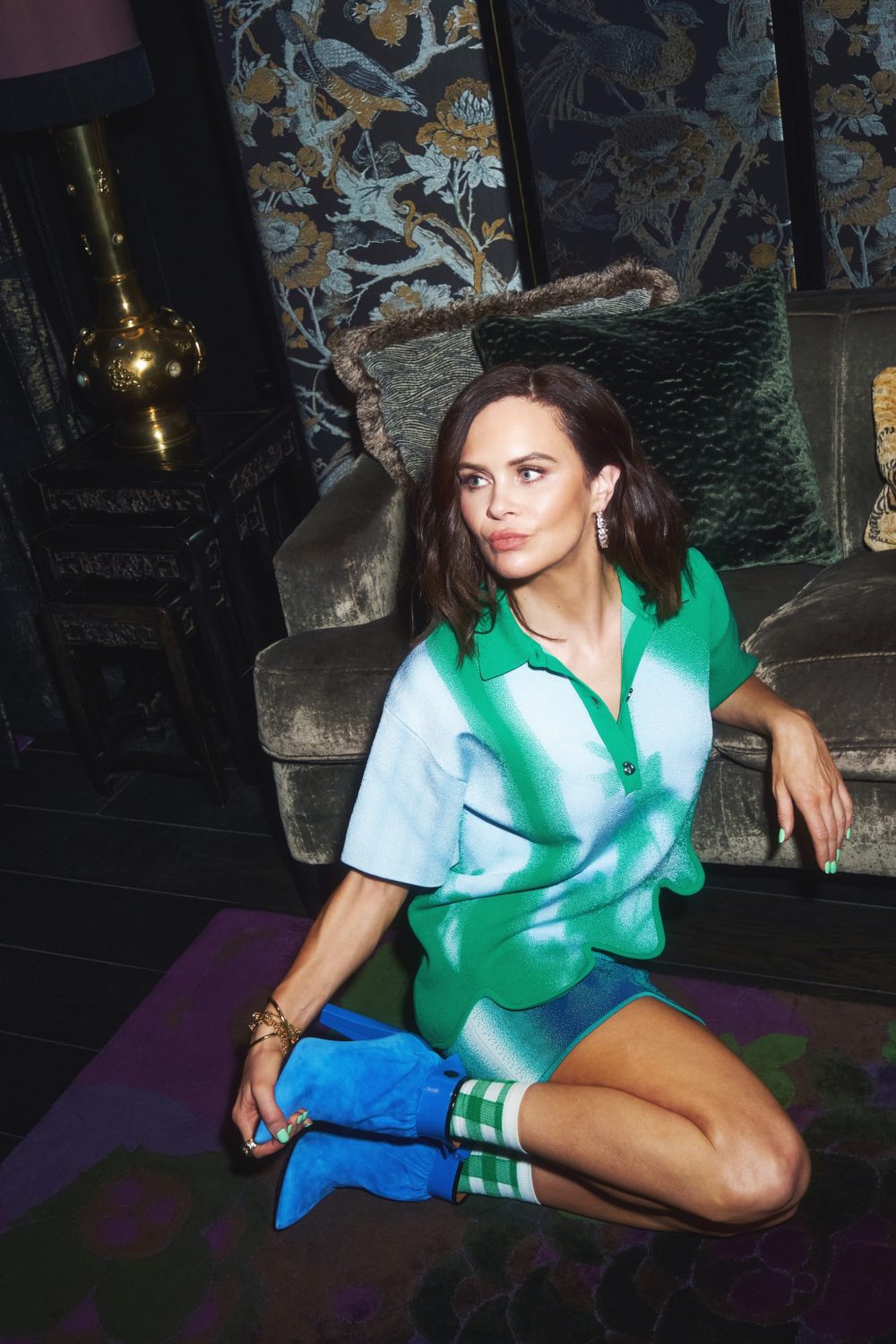
She remembers starting out and assuming she’d be welcomed by women already in the industry, only to learn comedy can be competitive, ego-driven, and survivalist. But she believes things are changing. “Back in the day, there was so little work for female comics,” she says, “it was either me or her.” Now, she enjoys the camaraderie she sees among women in comedy and wants that culture to grow.
For someone who sells out rooms at scale, McNally’s idea of bliss is disarmingly ordinary. She loves her quiet life. She values her independence. She romanticises Sundays, “single woman Sundays,” she calls them, taking herself to matinees, picking up the papers, and building rituals that make solitude feel like luxury rather than lack.
And when she describes happiness, it isn’t a brand deal or a spotlight. It’s the small, intimate relief of being off-duty. “Nothing brings me more joy than drinking half a bottle of Pinot Grigio on the couch with one of my friends,” she says.
It’s the kind of ending that fits McNally perfectly: sharp, soft, and entirely uninterested in pretending.
Joanne’s spectacuarly record breaking Pinotphile tour continues globally – for tickets visit joannemcnally.com/live-shows.