Picture this: You’ve got 15 minutes before you need to leave. Hair’s done, makeup’s done, shoes are picked out. Then you remember the shapewear. Do you wrestle into it now and risk sweating through your makeup? Skip it and spend the evening feeling self-conscious? Or just wear something else entirely?
Here’s a better option: stop treating shapewear like a separate wardrobe category. Dresses with built in shapewear eliminate that entire calculation. The shaping is already there, built into the construction. You pull on one garment and you’re done. No layering, no adjusting, no visible lines where something ends and something else begins. It’s not revolutionary. It’s just smarter design.
What “built-in shapewear” actually means
It’s exactly what it sounds like. Instead of wearing shapewear under a dress, the shaping layer is sewn directly into the garment. There’s an outer fabric layer that creates the look, whatever style, color, or drape you want, and an inner compression layer that smooths specific areas. Usually the midsection, sometimes hips, occasionally the entire torso.
The construction matters here. Cheap versions just make the whole dress tight. Well-made versions use panel construction: targeted compression zones where you want smoothing, regular fabric everywhere else. The seams are bonded or laser-cut so they don’t create ridges under the outer layer. When it’s done right, no one can tell where the structure stops and the dress starts. You just look smooth and put-together.
The benefit isn’t just aesthetic. It’s practical. One less layer means less heat, less bulk, less stuff to adjust throughout the day. You’re not dealing with shapewear that rolls down or rides up. You’re not creating visible lines at your waist or thigh where one garment ends and another begins. The dress is the shapewear. Problem solved.
What to look for before you buy
Not all built in shapewear dress options are created equal. Some genuinely work. Others just feel restrictive and look lumpy. Here’s what separates good construction from bad:
Compression placement, not compression everywhere
The worst designs squeeze your entire torso. The best ones target specific zones, usually your midsection, and leave everything else alone. You want “smoothing,” not “suffocating.” Look for descriptions that mention panel construction or zoned shaping. Avoid anything that just promises “all-over control.”
Fabric weight and drape
The outer fabric needs enough structure to hide the inner compression layer, but enough movement to still look like a dress. Ponte knits, structured jersey, and medium-weight blends work well. Thin, clingy fabric shows every seam and ridge underneath. Stiff fabric looks boxy and loses the point of having any drape at all.
Seam finishing that doesn’t broadcast itself
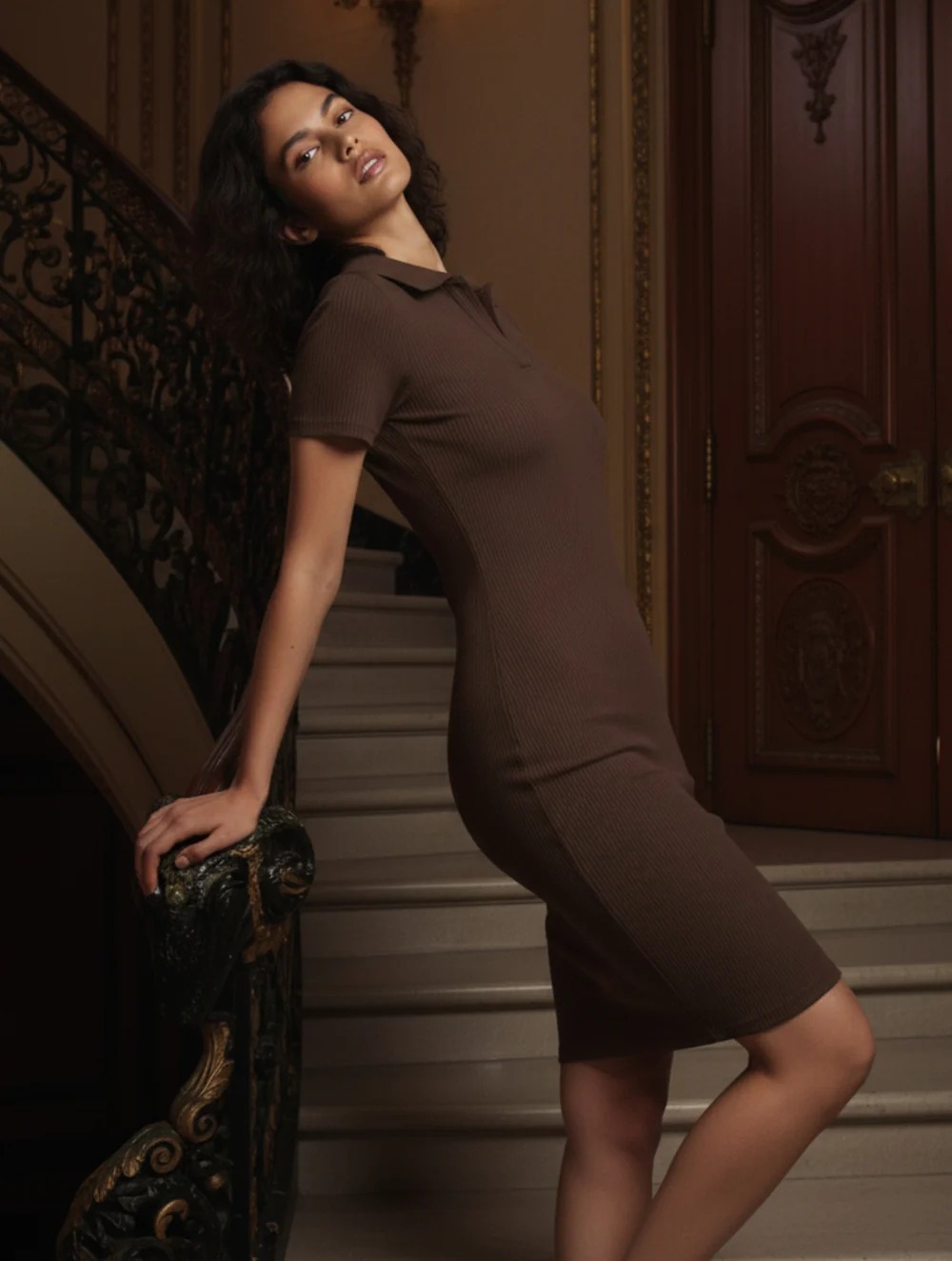
If you can see the edges of the shaping layer through the dress fabric, the construction is bad. Bonded seams, flat-lock stitching, and laser-cut edges are your friends. Bulky stitching and raised seams are not. This matters most in bodycon shapewear dress styles, where everything shows.
Brands like HEYSHAPE design their entire line around this concept. The shaping is integrated into the dress construction, so you’re getting both the silhouette and the support in one piece.
How it handles your bra situation
Low back? Strapless? Plunging neckline? You need to know if the built-in shaping provides enough support to skip a bra, or if you’ll still need one. Some designs offer enough compression that adhesive cups or stick-on bras work. Others require a full bra, which limits your neckline options. Figure this out before buying, not after.
Engineering that actually stays put
Silicone grip strips. Internal boning at key points. Anti-roll elastic at the waist. These aren’t optional features. They’re requirements. Without them, your dress will shift during wear. The shaping layer will ride up, bunch, or roll, and you’ll spend your entire event adjusting it. Which defeats the entire purpose.
The comfort reality check
Can you sit without holding your breath? Bend over without feeling like you’re being cut in half? Walk at a normal pace? If the answer is no, either size up or pass. Built-in shaping should feel supportive, not punishing. If you can’t move comfortably, the dress doesn’t fit correctly.