
There is a rare softness to the way Nell Mescal speaks about difficult things. In conversation, as in her music, she has a gift for making vulnerability feel less like exposure and more like clarity. Her songs carry the ache of growing up, leaving home, falling in love, missing people, doubting yourself and still moving forward. They are intimate without being fragile, confessional without ever feeling careless.
It is perhaps why her fanbase has become so devoted. Mescal does not simply write songs for people to listen to; she writes songs that seem to meet them where they are. Her work feels emotionally precise, alive with the kind of feelings that are often hard to name until someone else has sung them back to you.
Her new single, Settles, arriving in June, is one of her most tender releases yet. Written about leaving someone she loves for work, the song captures the bittersweet reality of modern love: the airport goodbyes, the long-distance ache, the promise that missing someone does not mean losing them, and the hope that eventually, the chaos will soften into something steadier.
“When I wrote Settles I was unable to write a sad song,” Mescal says. “I was in the middle of falling in love and dealing with the long distance and the chaos of that. But I still wanted it to feel upbeat and I think for me, a lot of my songs revolve around a hope of some kind.”
The song began with an image. “I had this image of a sandstorm and wrote down in my notes ‘once the dust settles’ as a sort of reminder that one day things wouldn’t be as chaotic and we’d actually live in the same country and wouldn’t always be leaving each other at an airport,” she explains. “Now the lyric is ‘once it settles we’ll hide in the dust’… sort of meaning that when everything calms down and the dust settles, we will hide away from everyone and run off into the sunset.”
It is a beautiful image: love not as something untouched by difficulty, but as something waiting on the other side of it. Two people standing in the aftermath of motion, choosing to disappear together into the quiet.
For Mescal, that tension between love and leaving is not new, though Settles marks a different emotional register. “Settles is my first positive romantic love song where I touch on this, but I’ve been writing about this topic pretty much since I started writing,” she says. “Instead of it being about a relationship, it was about leaving Ireland or leaving my family or school. It’s always going to be a theme for me I think, but it’s nice to have a new spin on it.”

Leaving has been a defining part of Mescal’s story. She famously left school to pursue her dream of becoming a singer-songwriter, a decision that was both brave and abrupt. She remembers the moment with striking clarity.
“I think when I decided to drop out of school that was the sort of defining moment,” she says. “I don’t think I’ll ever forget it, but it was a Sunday night, I was in my bedroom crying about how going back to school the next morning felt impossible and spoke to my manager who felt excited by me coming to London.”
What followed was a decision made quickly, but not lightly. “I went downstairs and spoke to my parents and we decided that this would be my last week of school. I called my brothers and one of my best friends and that was it. I did one last week of school, then worked full time to get enough money for my first month’s rent and was gone within a month. It was all extremely quick.”
That leap, from teenage uncertainty into the beginning of an artistic life, is threaded through the way Mescal speaks about her younger self. When asked what she feels most protective over now, she pauses over the difficulty of the question.
“This question was honestly a hard one to answer,” she says. “I had to really think about it. For me looking back, I spent a lot of time not saying things that I felt out of fear and then overcompensating and maybe overdoing it or giving away too much. I think if I could go back I’d have trusted myself a little more and would protect my energy overall.”
It is a quietly powerful reflection, and one that reveals much about her songwriting. For Mescal, writing is not only a creative act, but a form of emotional excavation. It allows her to discover truths she may not have been able to reach through conversation alone.
“I think when I’m writing songs, sometimes it really does feel like they are being written themselves and I am just watching it happen,” she says. “Songwriting feels like holding up a mirror, being able to see clearly what I’m feeling and then it allows me to go even deeper.”
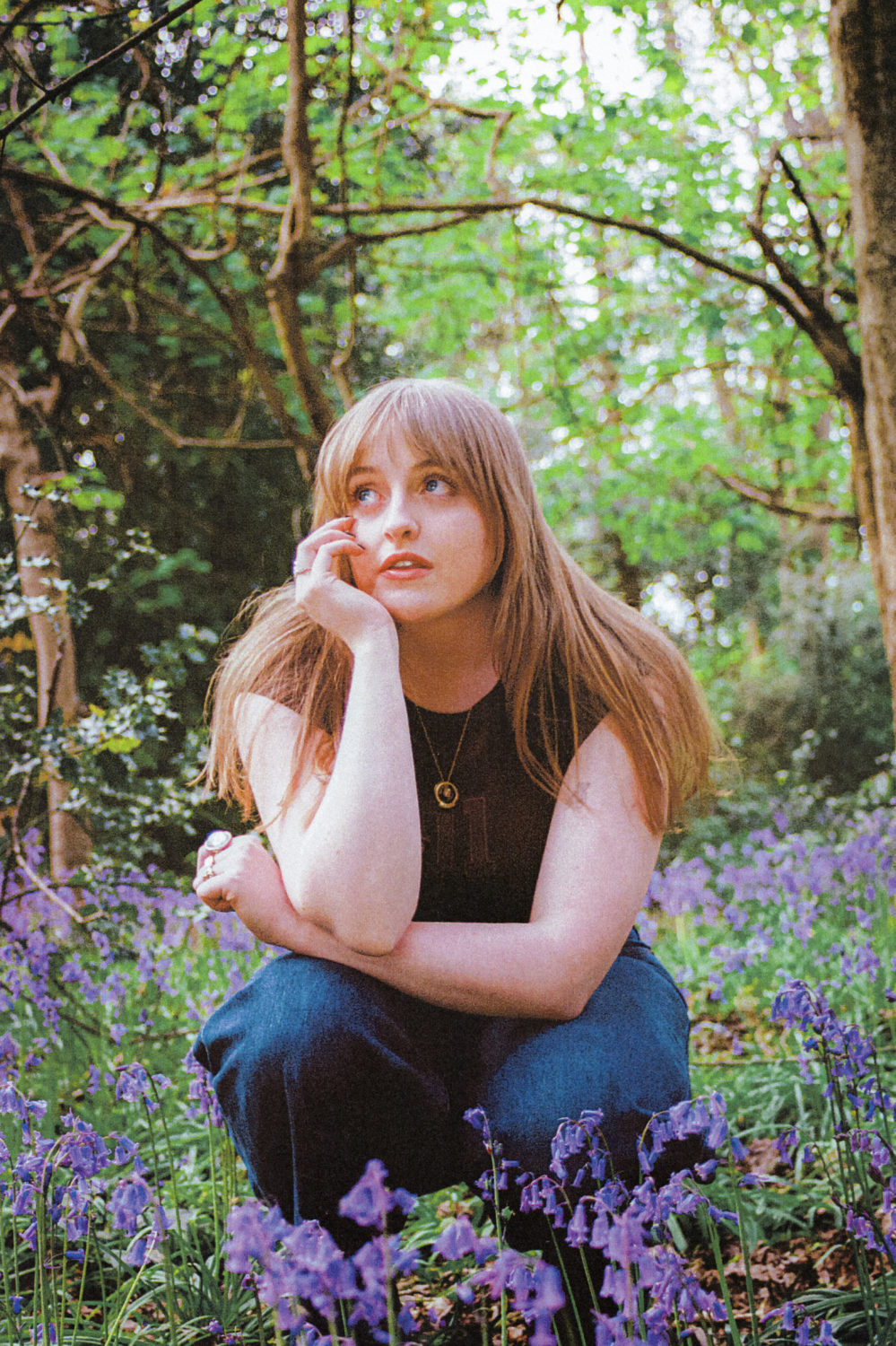
On harder days, the process can become almost revelatory. “On my worst days I do feel like I find out my actual thoughts towards my issues through a random lyric that popped into my head, more so than anything else,” she says, while also noting that talking to friends, family and her therapist remains “so necessary.”
Her music often holds tenderness and strength at the same time. There is pain in it, but also movement. There is softness, but never passivity. When asked whether she feels more powerful when she is vulnerable in a song, Mescal locates that power not only in the writing, but in the act of singing.
“I think I feel most powerful when I’m singing,” she says. “It’s a very strange feeling for me that I can’t really get from anything else. So when I’ve written something that feels vulnerable and then get to sing it, I get really excited to perform it.”
That sense of performance as release is part of what makes her connection with fans feel so unusually intimate. Her audience does not merely respond to the songs; they respond to the honesty behind them.
“I think it’s taught me to be more fearless in my writing,” she says of her fanbase. “It’s taught me to really fight for what I want, because I care so much about my relationship with the people who listen to my music and want them to get the most honest version of me as possible. I’m lucky enough to have such a lovely community around me and it makes me really proud and excited for what’s next.”
Mescal grew up in a deeply creative family which includes her brother, Oscar-nominated actor Paul Mescal of Gladiator 2, Normal People and Hamnet. While having a successful artistic sibling could easily have been intimidating, she describes it instead as something quietly encouraging.
“I think knowing Paul was making it work was comforting because if he could do it, what was stopping me,” she says. “But I do ultimately think that regardless, this would have always been my path. I’d been singing since I could talk and also creating, so I’m just lucky I have parents that would have supported me no matter what.”

There is a steadiness in that answer, a sense of destiny without arrogance. Mescal’s path may have been shaped by her family, but it was never borrowed from them. Music, for her, seems to have been less a choice than a language she had always been moving towards.
That language has also allowed her to speak openly about body image and the pressure placed on young women to measure themselves against impossible standards. Her song Thin, one of her most emotionally exposing releases, became a vital part of that conversation.
“I think for me I was struggling with body image long before I could even understand what it meant,” she says. “I was bullied from a young age mostly about my weight. I can’t tell you the amount of years I spent with crippling anxiety about the way I looked.”
Only recently, she says, did she begin to understand where much of that anxiety had come from. “It wasn’t until recently where I truly started to realise that my anxiety wasn’t coming from a place inside me, it was always someone else’s voice I could hear.”
There is something deeply moving about the distinction. Mescal describes growing older not as a simple arrival at confidence, but as a gradual process of separating her own thoughts from the harm left behind by others.
“I’ve always loved who I was and yes I’ve had bad days, but mostly I have a good relationship with my body,” she says. “I think getting older is a beautiful thing because you do start to work on those negative thoughts, weed out the ones that came from a random boy at age 10 and figure out which ones actually come from yourself.”
It remains, she says, “an ongoing work in progress,” but one that has been liberating. “For me learning to talk about it and learning to be ok with who I am has been extremely liberating. Putting my song Thin out to the world was one of the most daunting experiences ever and has been the most rewarding.”
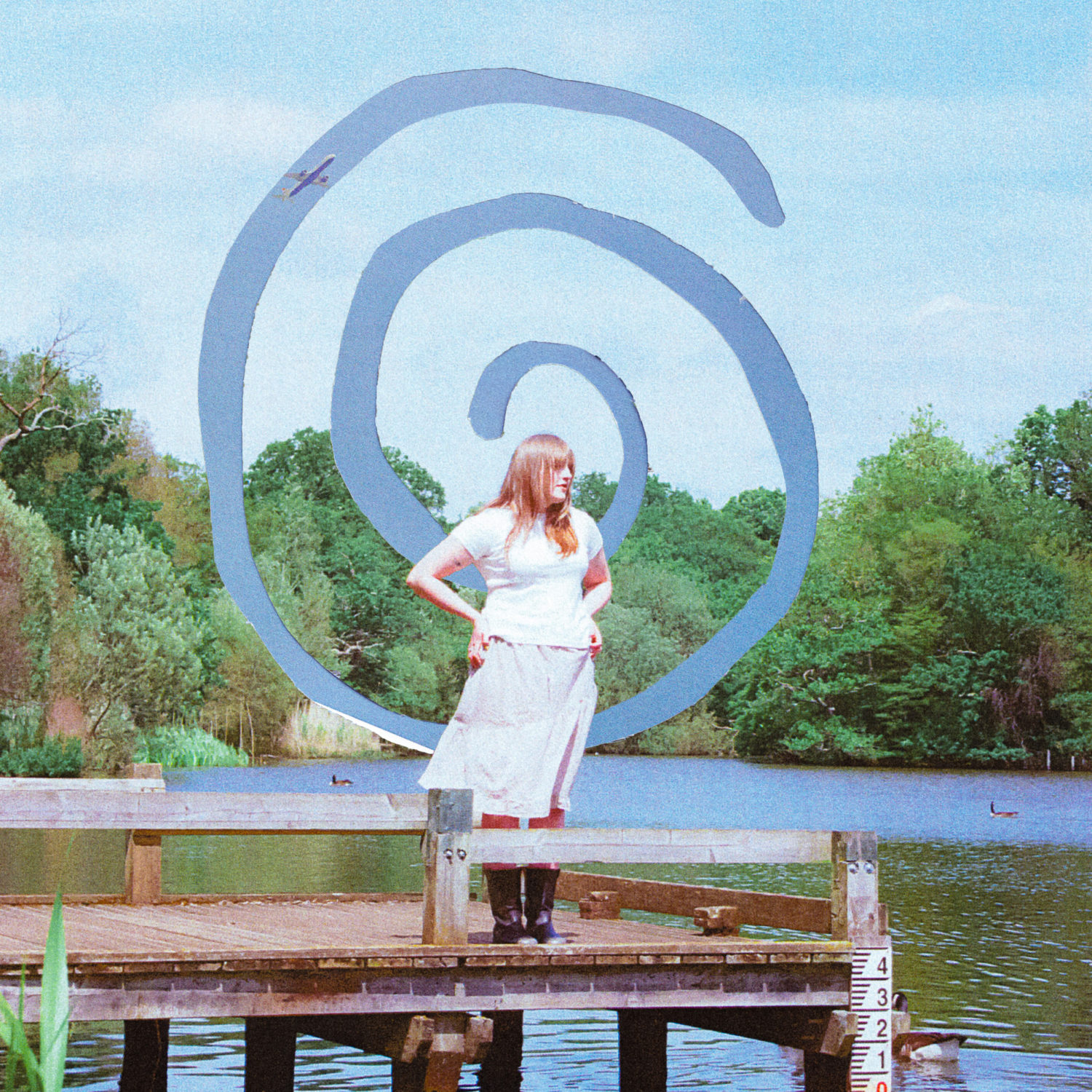
That combination of fear and reward seems central to Mescal’s creative life. She is not interested in easy exposure or neat narratives. Instead, she returns again and again to the difficult, honest places: the teenage self who needed more protection, the body that had been made into a battleground by other people’s cruelty, the family left behind, the country left behind, the lover left at the airport, the dream that demanded motion.
At this stage in her life and career, success is not a simple idea. Mescal is candid about her ambition, but also about the emotional complexity that comes with it.
“I think something maybe people don’t know about me is that I’m deeply ambitious and success is a difficult one for me,” she says. “With music, the goalposts are always moving and I can feel so far behind some days and then right where I want to be the next, so each day is different.”
Still, she knows what keeps pushing her forward. “To me the thought of getting to reach more people with a song that means something to me and getting to play more shows and see the world is the thing that pushes me. I’m learning not to worry about the timeline of it and focusing on the actual journey.”
For Nell Mescal, success seems to live somewhere between intimacy and scale: the private truth of a song, the shared experience of a live show, the conversations with friends, band and team, the possibility of seeing more of the world while remaining honest about the one inside her.
“To me, the idea of success is the conversations I have with my friends and band and the team about getting to experience as much as I can, while releasing songs that matter.”
With Settles, she does exactly that. It is a song about distance, but also devotion; about leaving, but not disappearing; about trusting that love can survive the dust of uncertainty. Tender, hopeful and quietly cinematic, it captures an artist learning to hold chaos and softness in the same breath.
And perhaps that is what Nell Mescal does best. She takes the things that once felt too difficult to say and turns them into songs that make other people feel less alone.
Nell’s beautiful new single Settles is now out on Friday 10th July.
Photographer
Lola Webster