
Letting a home in England or Wales now comes with an energy rulebook that keeps growing. Get it wrong and you cannot legally rent the property, serve certain eviction notices, or sidestep a financial penalty.
Around 52% of privately rented homes still sit below an EPC C rating, the standard the government wants every tenancy to meet by the end of the decade. That gap leaves a large share of landlords facing upgrade work, paperwork, or both.
The good news is that today’s rules are clear, the deadlines are known, and grants exist to soften the cost. Here is what applies now and what arrives in 2030.
Key Takeaways
- Every rented home in England and Wales needs a valid EPC, graded A to G, before it is marketed.
- The legal minimum today is band E; F and G homes need a registered exemption to be let.
- Every tenancy must reach at least EPC band C by 1 October 2030.
- Today’s fines can reach £5,000 for a single property; the 2030 regime pushes the ceiling much higher.
- Grants such as the heat pump scheme help fund low-carbon heating and insulation work.
What an EPC Is and How the Rating Works
An Energy Performance Certificate grades a property’s energy efficiency from A, the most efficient, down to G, the weakest. It also lists running costs, a potential rating, and the improvements that lift the score.
Before going further, this current rundown of landlords EPC requirements maps neatly onto the rules below and is handy if you let homes around south London. Knowing where each property sits is the starting point for any upgrade plan.
An accredited Domestic Energy Assessor carries out the survey, which usually takes around 45 minutes to an hour. The certificate stays valid for ten years, and a fresh one typically costs between £60 and £120.
The assessor reviews the parts of a home that drive its score, including:
- Windows, doors and glazing
- The boiler and main heating system
- Walls, roof and loft insulation
- Lighting and any renewable technology, such as solar panels
| Quick tip: Pull up your latest certificate before you spend anything. It lists the measures that would raise your band, ranked by impact, so you budget around real recommendations. |
The table below shows where each band stands under the rules in force today.
| EPC Band | Energy efficiency | Can you let it? |
| A to C | High | Yes, and it meets the 2030 standard early |
| D to E | Moderate | Yes today, but below the 2030 floor |
| F to G | Low | No, unless an exemption is registered |
EPC bands and their letting status for domestic lets.
Current EPC Requirements for Rental Properties
Minimum Energy Efficiency Standards, usually shortened to MEES, set the floor that every let home must clear. The minimum rating for a rented home is band E.
This duty arrived in stages. New tenancies have needed an E rating since April 2018, and since April 2020 the same threshold has covered every existing tenancy too. A home graded F or G cannot be rented unless the landlord registers a valid exemption. The detail sits in the Energy Efficiency (Private Rented Property) (England and Wales) Regulations 2015, and you can cross-check your own situation against the government’s domestic MEES guidance.
| Key stat: More than half of the private rented sector already sits below band C, so the practical question for many landlords is not whether to upgrade, but when. |
Knowing the milestones makes planning easier. The timeline below shows how the standard has moved and where it is heading.
| Date | What changed |
| April 2018 | EPC band E required for new tenancies and renewals |
| April 2020 | Band E extended to all existing tenancies, with no “wait it out” option |
| January 2026 | Warm Homes Plan confirms a move to band C for all tenancies |
| 1 October 2030 | Minimum rises to band C, with penalties set to climb sharply |
Key MEES milestones for domestic landlords.
Penalties, Exemptions and the Hidden Costs of Non-Compliance
Local authorities enforce MEES and can issue penalties of up to £5,000 per property under the current regime. The total is built from separate charges tied to the breach.
- Up to £2,000 for letting a sub-standard home for under three months
- Up to £4,000 where the breach runs for three months or more
- Up to £1,000 for false or misleading entries on the exemptions register
- A further £2,000 where a compliance notice is ignored
From October 2030 the ceiling is set to rise toward £30,000 per property, a sixfold jump that makes ignoring the rules costlier than fixing them.
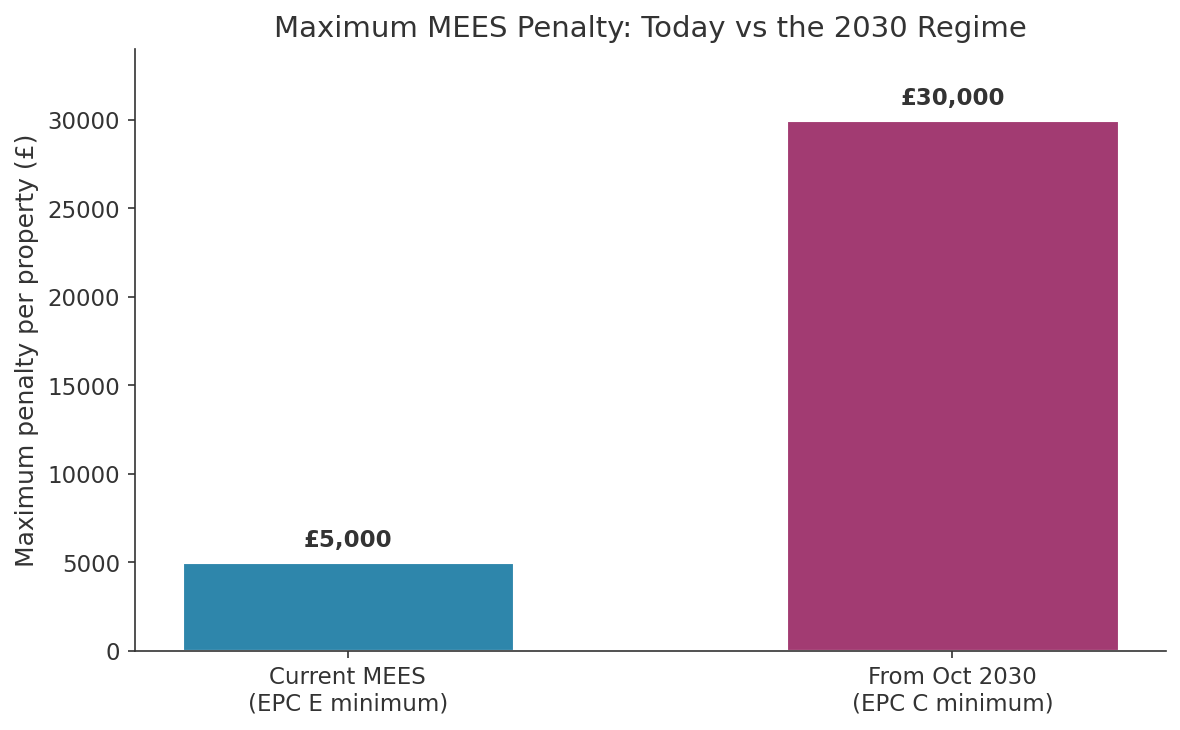
Figure 1: The maximum penalty per property climbs from £5,000 to £30,000.
| ⚠ Warning: Money is not the only risk. Without a valid certificate you cannot serve a Section 21 notice, and several lenders and insurers expect a passing rating before backing a buy-to-let. |
If a property genuinely cannot reach the threshold, an exemption may apply. Each one must be logged on the PRS Exemptions Register, and common grounds include:
- All cost-effective improvements have been made up to the spending cap
- A freeholder, lender or tenant has refused consent for the works
- An independent surveyor confirms the measures would devalue the home
- The building is listed and improvements would unacceptably alter its character
At £5,000 some owners treated the fine as cheaper than the upgrade. At £30,000, that maths no longer works.
How to Improve Your EPC Rating
Raising a band rarely needs one dramatic change. A handful of well-chosen measures, fitted in the right order, usually moves the score and trims tenant bills at once.
- Insulate first. Roughly a third of a home’s heat escapes through uninsulated walls, so loft and cavity work often gives the biggest return per pound.
- Upgrade glazing. Single glazing loses about twice the heat of double glazing, and better windows lift both comfort and score.
- Replace a tired boiler. Swapping an old unit for an A-rated boiler, or a heat pump, improves efficiency and cuts repair calls.
- Switch to LED lighting. LED bulbs use at least 75% less power than old incandescent ones and cost very little to fit.
- Seal the draughts. Strips, sealant and brush trims around doors and windows are cheap and surprisingly effective.
- Add solar where it suits. On the right roof, photovoltaic panels reduce consumption and strengthen the rating.
Costs vary widely by property, so treat the figures below as broad guides rather than quotes.
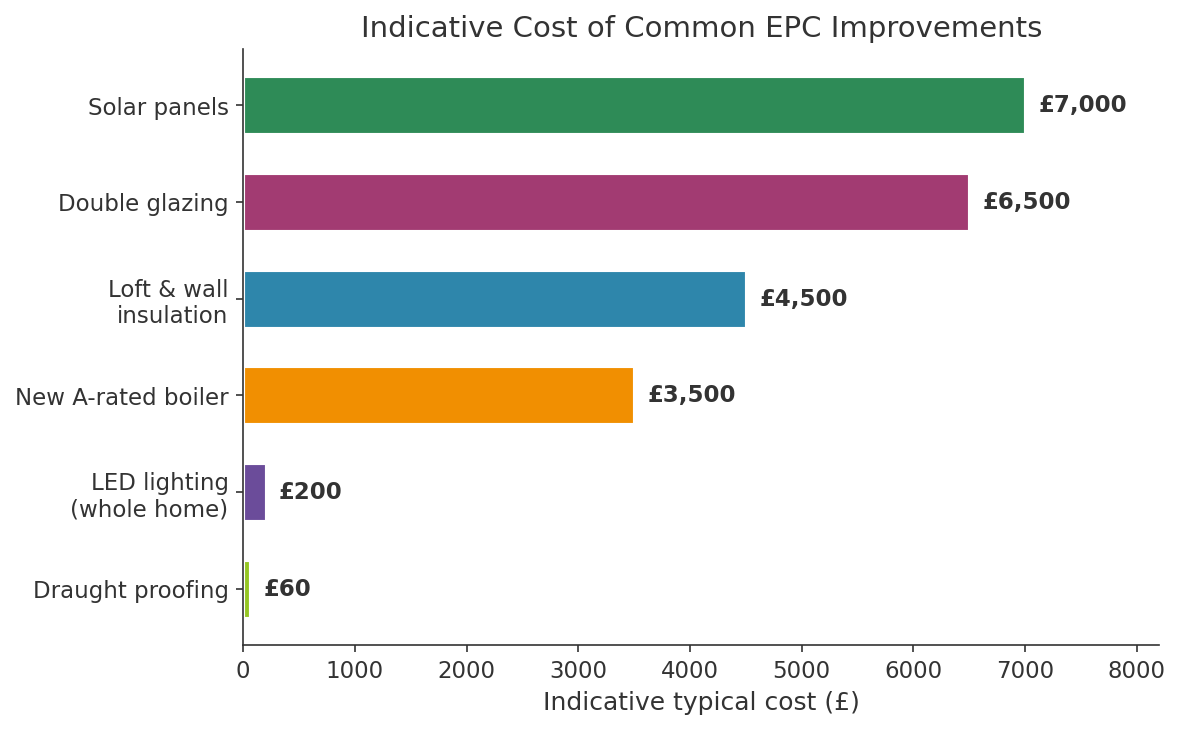
Figure 2: Indicative typical costs for popular efficiency measures.
Efficiency is only half of what tenants notice. A warm, well-presented home lets faster, which is why thoughtful interiors, from layout to statement pieces that define a space, sit alongside the practical upgrades above.
Many owners lean on a managing agent to keep this on track. As Fiona put it in a Google review of one south London lettings team, the value of “fully managing a property, especially in these changing times with all the red tape” is what makes compliance feel manageable.
Funding and Grants That Cut the Cost
Several schemes offset the price of upgrades. The main routes worth checking are below.
- The Boiler Upgrade Scheme offers a £7,500 grant toward an air source or ground source heat pump
- The Energy Company Obligation funds insulation and heating measures for eligible, lower-income households
- The Great British Insulation Scheme can cover loft or cavity wall insulation for qualifying homes
- Zero-rate VAT applies to some energy-saving materials, lowering the headline price of certain installs
The heat pump grant is the headline offer, and you apply through an MCS-certified installer who claims it on your behalf. Full eligibility detail sits with the official GOV.UK service. One caveat: under the current method a heat pump does not always lift the band, so request a rating simulation if the score is your goal.
Greener upgrades carry a marketing upside too. Demand for eco-conscious living keeps climbing, a trend visible from rental listings to coastal eco-sanctuaries built around sustainability, and tenants read a strong rating as a promise of lower bills.
Preparing for the 2030 EPC C Standard
The Warm Homes Plan, published on 21 January 2026, confirmed the next big shift. From 1 October 2030, every tenancy across the two nations needs the equivalent of EPC band C or better, unless a valid exemption applies.
Three further points sharpen the picture for anyone planning ahead:
- A £10,000 cost cap will apply to most homes, with a 10% property-value cap for those worth under £100,000
- A reformed certificate, built on a new Home Energy Model, will change how performance is measured
- Maximum penalties climb to as much as £30,000 for each property, alongside tougher enforcement
Legislation is still being finalised, so the fine print may shift. Even so, the policy direction is firm, and treating band C as the target now is the safer bet. The short video below answers the questions landlords ask most.
Video: “Labour’s EPC plans: Your questions answered.” Watch at https://www.youtube.com/watch?v=uU8782jhIeQ
Placement note: embed within this section. The clip walks through the proposed EPC C standard and what it means for private landlords.
There is a financial logic to acting early. A compliant, efficient home is cheaper to run during voids, easier to let, and holds its value, much like any asset that rewards a long-term outlook.
Frequently Asked Questions
What is the minimum EPC rating for landlords in 2026?
The minimum sits at band E across England and Wales. Properties rated F or G may not be let unless you register an exemption. The floor then climbs to band C in 2030.
How long is an EPC valid?
An EPC lasts a decade from the assessment date. If you make improvements, commissioning a fresh certificate is sensible so the higher score is on record and visible to prospective tenants.
What happens if I let a property without a valid EPC?
You cannot rely on a Section 21 eviction route, you risk a fine reaching £5,000 for the home, and some lenders or insurers may treat the missing paperwork as a breach of their terms.
How much does an EPC cost and how long does it take?
Expect to pay roughly £60 to £120 for a domestic survey, which a qualified assessor completes in about an hour, and that paperwork is what makes a rating lettable.
Do the same rules apply in Scotland and Northern Ireland?
No. The MEES framework, including the 2030 band C target, covers England and Wales only. Both other nations run their own standards, though each still requires a valid certificate to let a home.
Will a heat pump improve my EPC rating?
It attracts the £7,500 heat pump contribution and cuts carbon output, yet under today’s method it does not always raise the band. Request an EPC simulation from your installer before committing if the score matters most.
Staying Ahead of the Curve
The direction of travel is settled. A valid EPC, a band E rating today, and a credible route to band C before 2030 keep your property lettable and your costs predictable.
Begin with your latest certificate, work through its recommendations, and line up grants while they last. Owners who move in stages avoid the scramble, and the steeper bills, that arrive when a deadline looms.
References
GOV.UK, Domestic private rented property: minimum energy efficiency standard, 2026 — https://www.gov.uk/guidance/domestic-private-rented-property-minimum-energy-efficiency-standard-landlord-guidance
GOV.UK, Apply for the Boiler Upgrade Scheme, 2026 — https://www.gov.uk/apply-boiler-upgrade-scheme
The Independent Landlord, New EPC rules for landlords explained, 2026 — https://theindependentlandlord.com/new-epc-rules/
Simply Business, New energy efficiency rules for rental properties, 2026 — https://www.simplybusiness.co.uk/knowledge/landlord-regulation/new-energy-efficiency-rules-for-rental-properties/
Leeds City Council, MEES statement of principles, 2026 — https://www.leeds.gov.uk/housing/information-for-landlords/energy-efficiency-statement-of-principles
Fact Check: All statistics and data points in this article were verified against original sources as of 11 June 2026. Sources are listed in the References section.