In the 60 or so years since Northern Europeans finally got fed up vacationing under grey skies and have been heading southwards ever since, few destinations have remained as relentlessly popular as Tenerife. The largest of the Canary Islands, situated off the coast of Africa at around the same latitude as Morocco’s southern border is pretty much a guarantor of year-round sunshine. It might take nearly 5 hours to get there, but for decades and across the generations, that’s a small price that millions have been more than happy to pay.
Tenerife, however, seems to have been leading something of a double life. All of that late 20th-century development, which has, as it has right across the Mediterranean, spawned conurbations that simply didn’t exist before, is concentrated in the south of the island. The reason is hardly a revelation; the southern part of Tenerife is hotter, drier, and, of course, sunnier – precisely the conditions that the brave new touristed world was seeking out.
For its native population, though, the south of Tenerife held no such particular allure. The island’s colourful capital, Santa Cruz, whose February carnival is eclipsed only by Rio de Janeiro’s, is located in the North, where for centuries people have lived in a more temperate world of melancholic mists interspersed with sporadic shafts of sunshine.
Furthermore, tourism on the island didn’t arrive with southern hotspots like Los Cristianos and Playa de las Americas but was already established in the North during the Victorian period. I suppose an era when ladies used horse-drawn wooden bathing machines for a modesty-prioritised dip in the sea wouldn’t have had much use for sun loungers and surfboards. But while they may have been doing it differently, the Victorians were definitely right there vacationing on Tenerife almost a century before.
Spain’s very first luxury grand hotel, the Gran Hotel Taoro, didn’t make its debut in Madrid or Barcelona either, but was magnificently perched above the little town of Puerto de la Cruz on Tenerife’s Northern coastline when it launched in 1890. With a guest list embracing royalty and celebrity, the Gran Hotel Taoro rapidly evolved into a destination to see and be seen, and while the journey just to get there may have consumed the best part of a week, guests would typically take up residence for months rather than days.
The hotel’s popularity, however, waned in tandem with the sunny South’s burgeoning popularity, eventually closing in 1975. Aside from a tepid attempt to become a casino, the Grande Dame fell into a 50-year-long slumber, its glamorous glory days subsumed into an unstoppable decay.
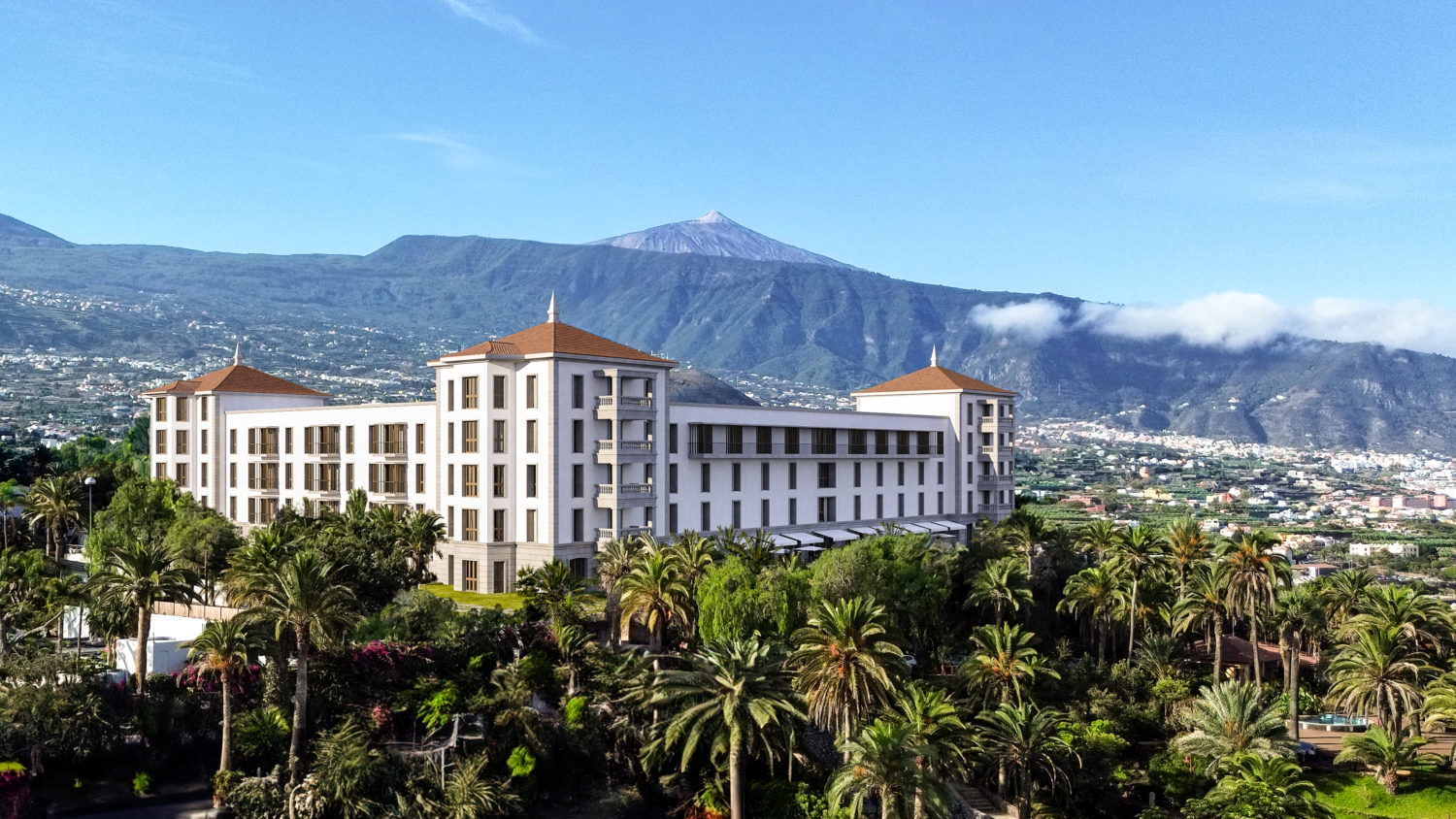
However, following its acquisition by the Cabildo (local government) and a three-year-long £44 million restoration, in 2026 the Gran Hotel Taoro rises Phoenix-like once again, though the property’s half-century of neglect precludes any notion of reintroducing a period building. The new iteration of the Gran Hotel Taoro presents as quite a modern-looking building, albeit with its majestic presence fully intact.
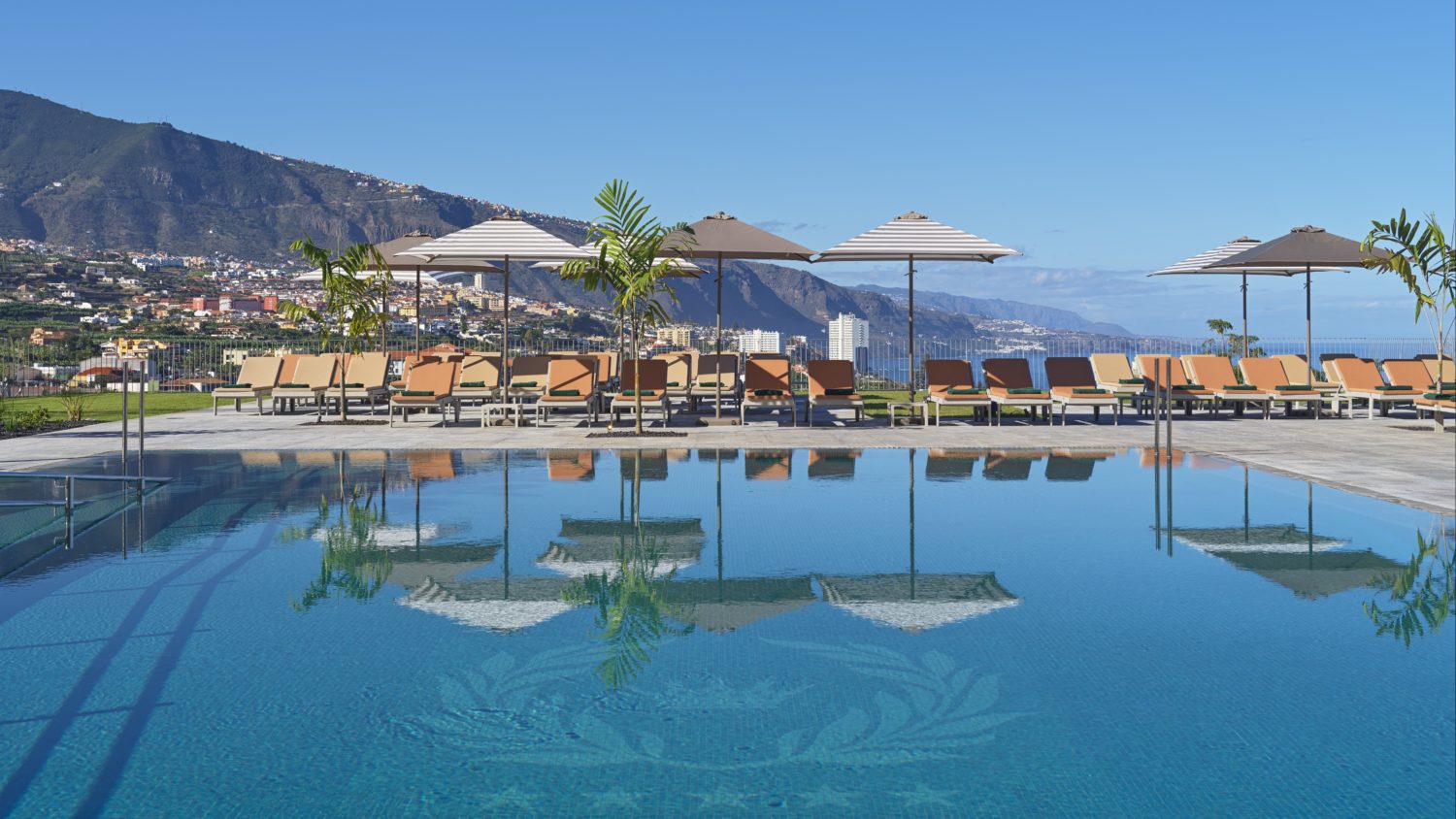
With the Atlantic shimmering away to the North, and the ever-present volcanic Mount Tiede, Spain’s highest peak, dominating the skyline to the South, the views are superlative. A huge terrace looks down onto Puerto de la Cruz below, while the Taoro’s once genteel gardens are well on the way to being restored to their horticultural pre-eminence.
Among a set of old pictures on display at the hotel is one of Agatha Christie in the gardens. She’d stayed there in 1927 in the wake of her divorce and is said to have finished writing her novel, The Blue Train, during her time at the hotel. A dedicated lounge, the Sala Agatha Christie, will eventually house her complete works.
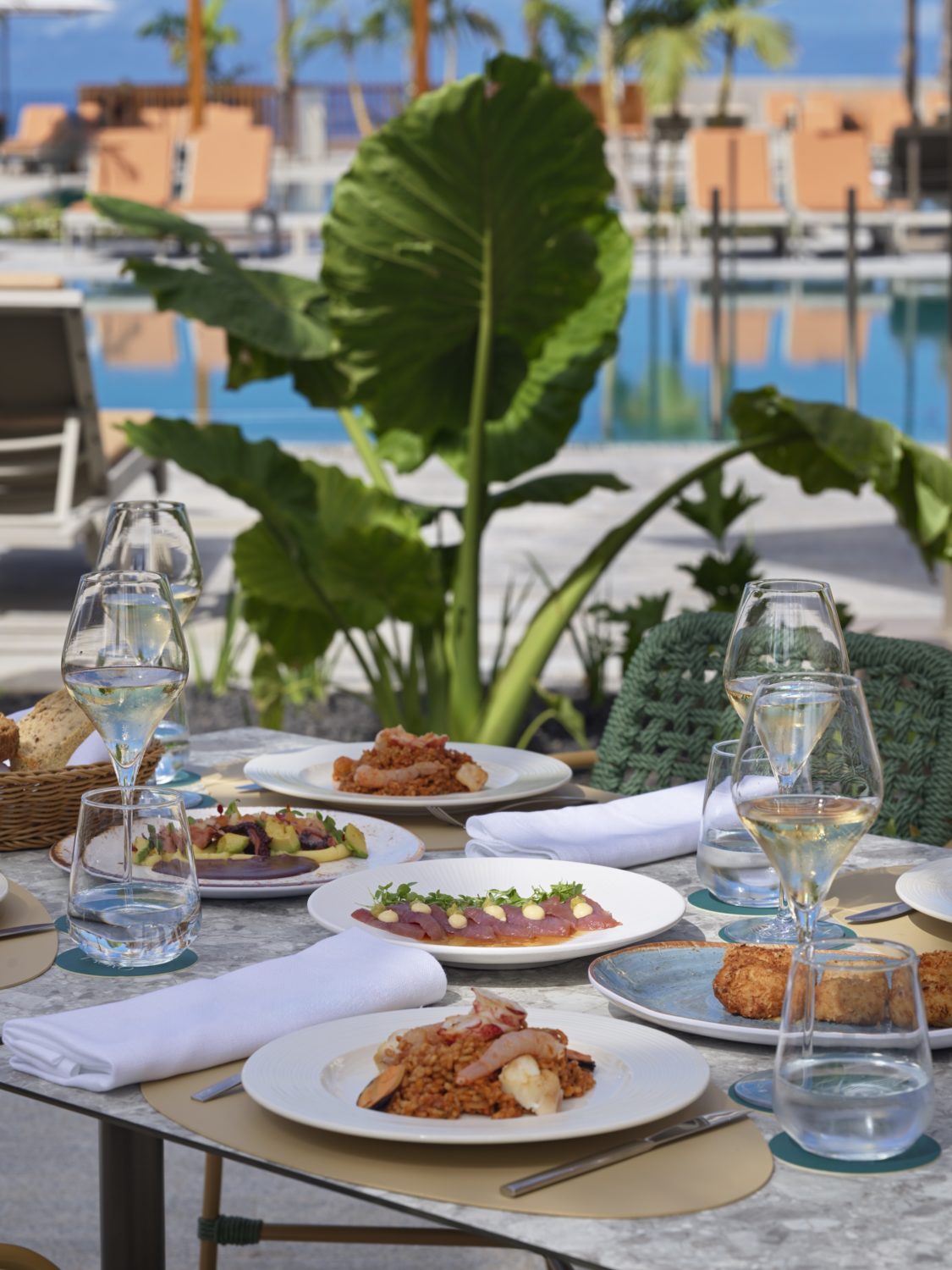
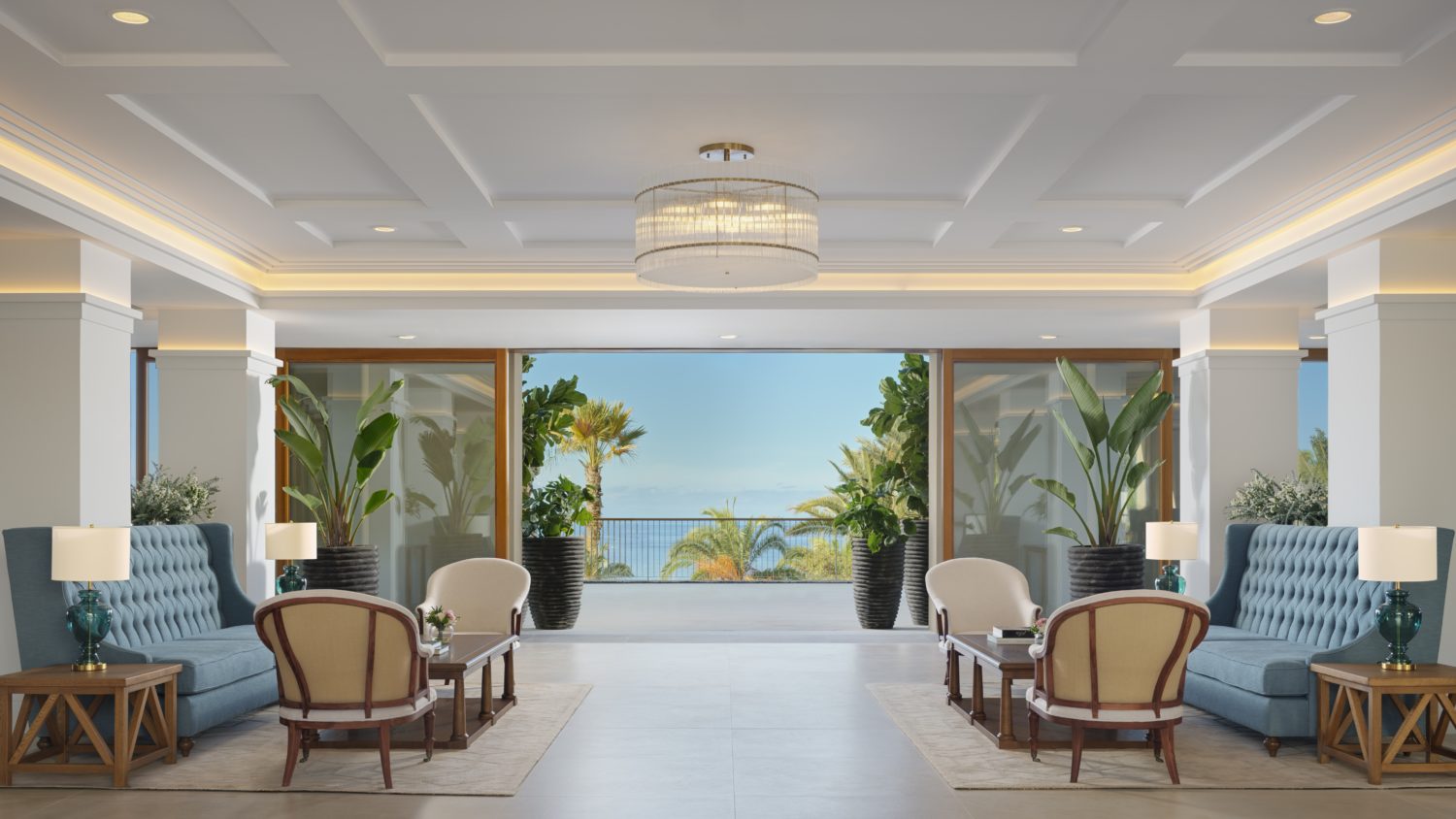
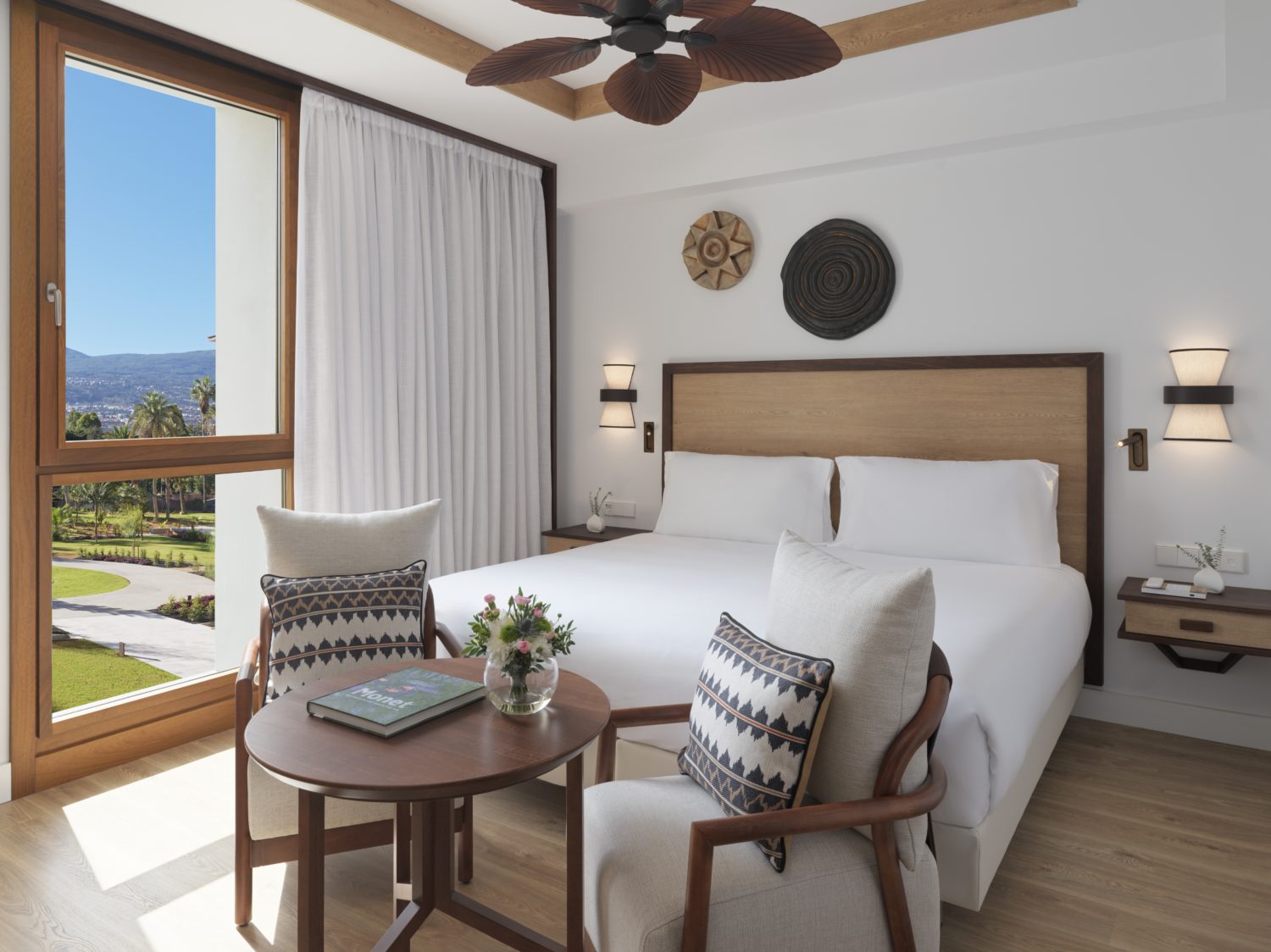
The overall design template of the 21st Century Gran Hotel Taoro, whilst striking, remains relatively restrained. The property’s 199 rooms and suites, finished in muted browns and creams, lean into a reserved opulence rather than any artistic posturing. There’s also clearly a positioning of the hotel as Northern Tenerife’s gastronomic epicentre.
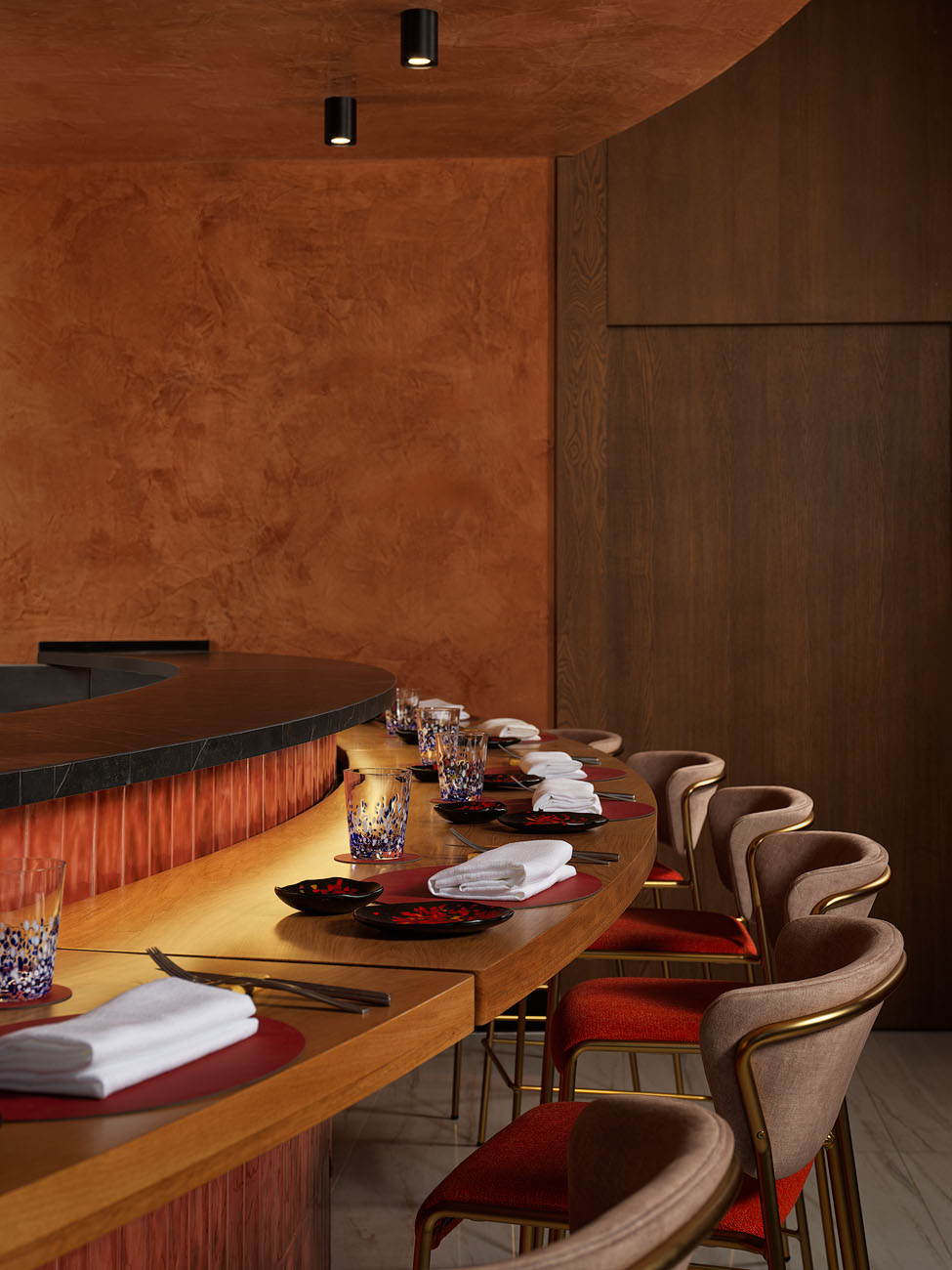
OKA is overseen by Ricardo Sanz, the pioneer of Japanese and Japanese-Mediterranean fusion in Spain and the first recipient of a Michelin star for non-Spanish cuisine. The gourmet bistro Amalur, meanwhile, and fine-dining Lava are overseen by Erlantz Gorostiza. A close confidante of multi-Michelin-starred legend and fellow Basque, Martin Berasategui, Gorostiza oversees Berasategui’s outpost on Tenerife, the first restaurant on the island to be awarded two Michelin stars.
Within Lava, there’s also a 6-seat chef’s table where, as smoke wafts, fires crackle, and tweezers tweak, Gorostiza and his team perform a kind of gastronomic close-up magic. Perched on the seat next to me as we are held captive by the inner workings of a haute cuisine powerhouse is Kate Bigger who supervises B.A. Holidays 100 or so properties on the island.
The Gran Hotel Taoro is the latest addition to her portfolio, and her delight at finally finding herself inside the hotel as it consummates its resurrected Grand Dame status, is palpable. Watching the huge project slowly unfolding, Kate explains, has been both fascinating and frustrating, with the entire region absorbed by the story and impatient for the return of its legendary landmark property.
The next morning, we’re introduced to the walking, talking lexicon of Canarian culture that is Roberto Carlos, waiting to whisk us out into the sparsely populated Teno National Park in the island’s Northwestern corner. Roberto’s relationship with the hotel is indicative of the direction in which the Gran Taoro intends to steer its guests. That might not be the piano recitals and poetry readings with which its Victorian visitors would have entertained themselves during their months-long sojourns, though it does effectively represent the same culturally inspired approach.
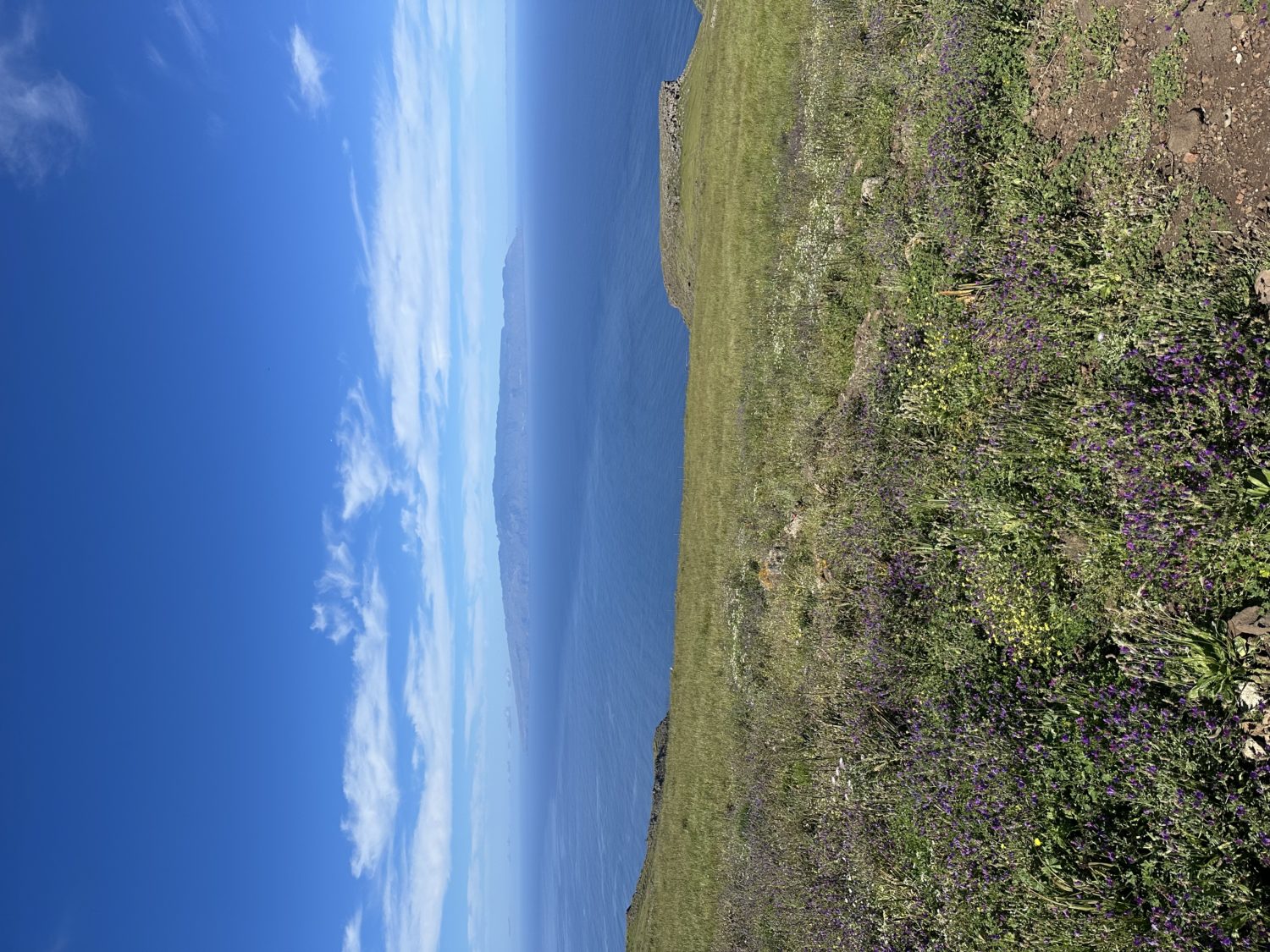
As we drive in perfect Spring sunshine through spectacular Middle-Earth-like landscapes, the highly affable Roberto is busily dispensing a textbook’s worth of historical, geographical, and sociological insight into the island of his birth. A short hike across stunningly beautiful terrain with nothing but the mist-shrouded outline of the neighbouring island of La Gomera for company, rapidly recalibrates any preconceived notions of what to expect on Tenerife. But why is he carrying that huge pole around?
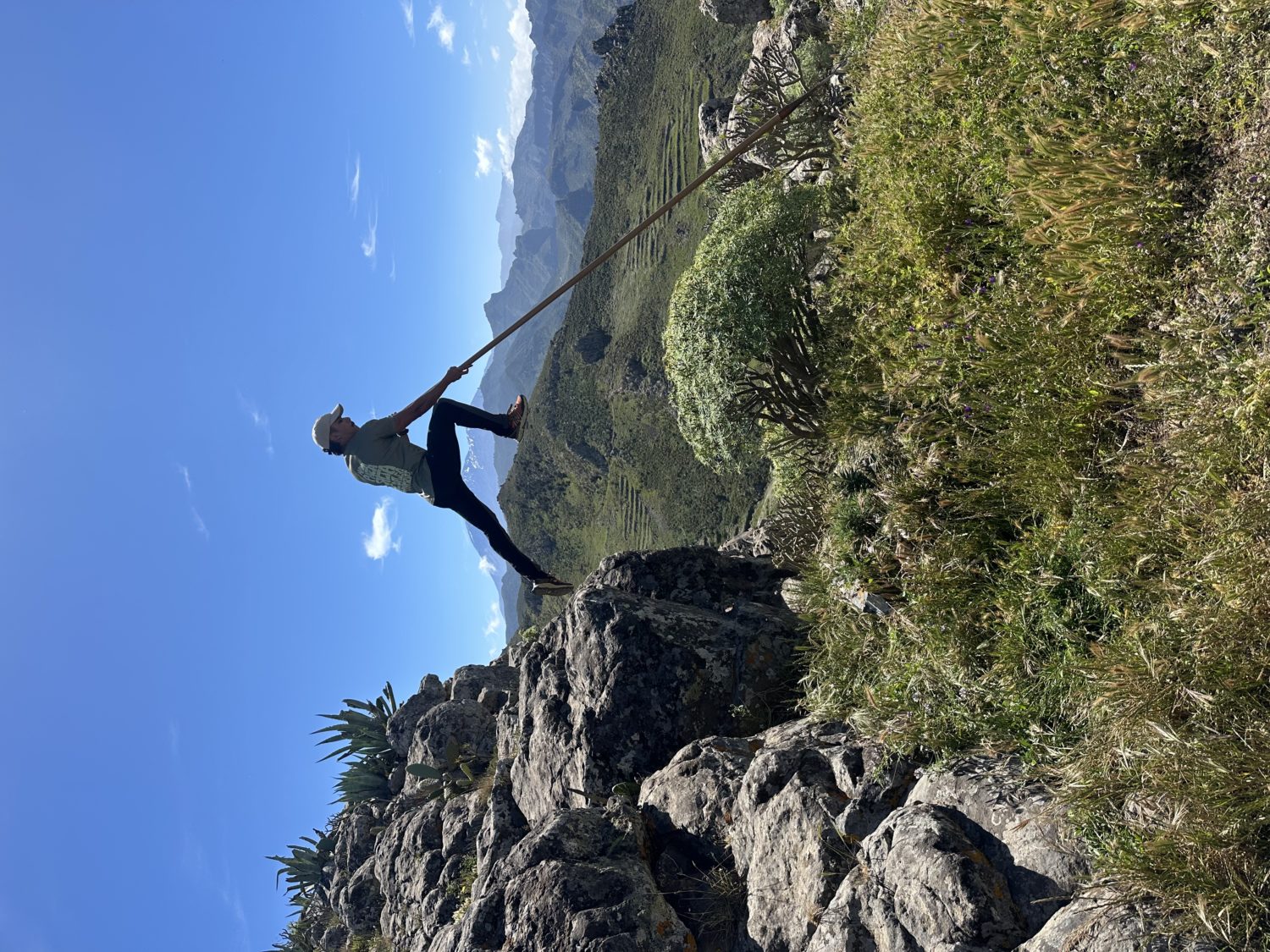
Salto de Pastor, or Canarian shepherd jumping, is an ancient skill where shepherds used long poles to navigate the crags and crevices of the rocky terrain where they spent most of their time. It lives on as a sport widely practiced across the archipelago. Roberto excels at it, of course, as he ably demonstrated, flying about through the afternoon sunshine with a grace and dexterity that would put a Texas pole dancer to shame. Though the final calling point of our cultural odyssey was perhaps, for me, the most memorable – Ramon’s guachinche.
Guachinches are unpretentious restaurant pop-ups usually located in someone’s garage or backyard, serving typically rustic dishes accompanied by home-made wine. They’re a Canarian phenomenon, though predominantly found in the North of Tenerife, yet another manifestation of that North-South divide. Ramon, now retired, sits sedately underneath his straw hat outside what actually is the door to his garage, inside of which his family were busily catering to a crowd almost entirely comprised of locals spilling out into the garden.
With such authentic delights as octopus and mash, rabbit stew, and papas arrugadas (wrinkled new potatoes) cooked in seawater and served with the ubiquitous green mojo sauce, the afternoon unfolded into a joyous celebration of the island’s down-to-earth, day-to-day cuisine. Most of the ingredients came from the small-holding next door, organic before organic was invented, or straight out of the Atlantic glimmering away below us.
Guachinches, many of which are passed about by word of mouth, are, Roberto informed me, a particular preserve of his father, who apparently sniffs them out like a truffle hound – a man I’ll be wanting to meet on any return trip.
Back at the Gran Hotel Taoro, following a pre-dinner visit to the just opened and sleekly stylish Sandára Wellness Centre with its stunning far-reaching views out along the coast, I took a post-dinner stroll through Taoro Park, the network of verdant pathways that winds its way down into the twinkling lights of Puerto de La Cruz. What I encountered was a charming little town kicking back on a Friday night, still notable, after centuries of touristic incursions, for its quintessentially Spanish atmosphere- not least from the number of people sitting down to dinner at midnight!
With its Agatha Christie festival, British church, and British Library, ever-present reminders of the Victorian travellers lured there by its pure Atlantic air and forgiving climate, Puerto de la Cruz is now also reunited with the grandiose building at the heart of its identity. So long written off as having had its day, it seems we haven’t heard the last of Spain’s first luxury grand hotel after all.
@britishairwaysholidays | britishairways.com/tenerife
@granhoteltaoro | granhoteltaoro.com
Ctra. Taoro, 2, 38400 Puerto de la Cruz, Santa Cruz de Tenerife
Roberto Carlos: teniqueoutdoor.com
Tenerife Holidays – British Airways Holidays offers seven nights, at the 5* Gran Hotel Taoro, from £1229pp, travelling on selected dates between 1 September – 30 September 2026 inclusive. Includes economy (Euro Traveller) return flights from London Gatwick Airport, one checked bag per person and accommodation with breakfast. Book by 10 June 2026. For reservations visit britishairways.com/tenerife